Guides
The stargazing night kit
The cheap things that decide how good the night is. Most of them are not optical.
By Scooter M. · published September 1, 2026
I'm not an astronomer and I don't have a lab. I'm someone who's genuinely into this — I read the manuals, compile the published specs, and do the arithmetic the box doesn't do for you. No lab coat. How we pick.
How this is funded. Lens & Lightyear earns a commission when you buy through a link on this page, at no extra cost to you. It does not change which products we pick or what we say about them — every card below carries a real reason to skip it. Prices are pulled live and were last verified October 18, 2026. Full disclosure.
The short answer
A red torch, a free planetarium app, something warm to sit on, and a notebook. Together they cost less than a spare eyepiece and they change what a child sees more than doubling the telescope's aperture would. Almost none of the good news in this hobby is optical.
Everything below assumes you already have the instrument. If you do not, how much to spend comes first — but come back here before you spend the last twenty dollars of the budget on it.
1. Red light, and why it matters more than glass
Dark adaptation is the most under-rated variable in amateur astronomy and the easiest to destroy. Twenty minutes to build most of it, forty for all of it, and one white light to lose it.
Red light at low intensity is the standard solution because it interferes with adaptation far less than white does. The practical difference on a faint target is larger than the difference between a 70mm and a 114mm telescope, and it costs a fraction as much.
2. A planetarium app, on the adult's phone
The free tier of any decent planetarium app closes the single biggest skill gap for a family with no astronomy background: knowing what is up there tonight and roughly where.
Two rules. Turn the brightness right down and use the app's night mode if it has one, or you will undo section one. And use it to decide what to look at *before* going outside, so the phone spends the session in a pocket.
3. Warmth, which is the real limiting factor
Sessions end because children get cold, not because the sky runs out. This is genuinely the most common reason a good night stops being good.
- A layer more than you think. Standing still outdoors is much colder than walking, and a child at an eyepiece is standing still.
- Something to sit or lie on. A camping mat or a folded blanket. It also solves the binocular weight problem — lying down is the most comfortable way to use 7x50s.
- A hot drink in a flask. Trivially cheap, and it buys twenty more minutes.
- Gloves that let a finger out. Focusers and thumbwheels do not work in mittens.
Quick picks
The kit, in order of how much it changes
| # | Product | Best for | Price |
|---|---|---|---|
| 1 | 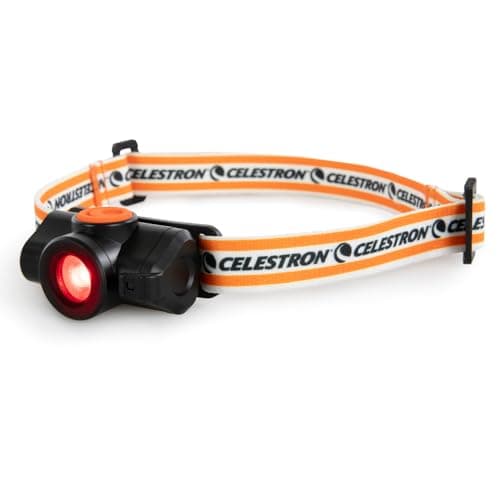 Celestron Night Vision Red Headlamp The cheapest item on this site and the one that changes the most. | The single highest-value thing here | |
| 2 | 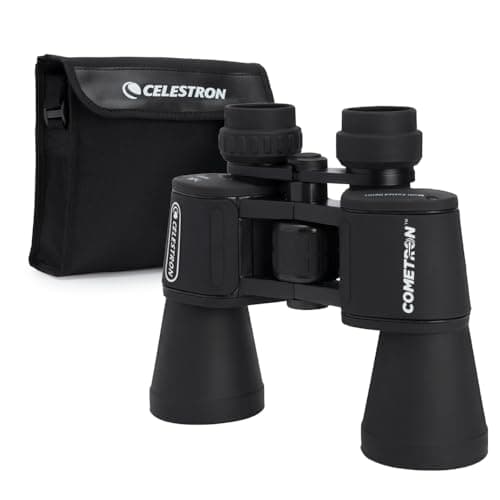 Celestron Cometron 7x50 Five-second setup, a 6.6 degree field, and the widest views available at any price. | The optics half of the kit | |
| 3 | 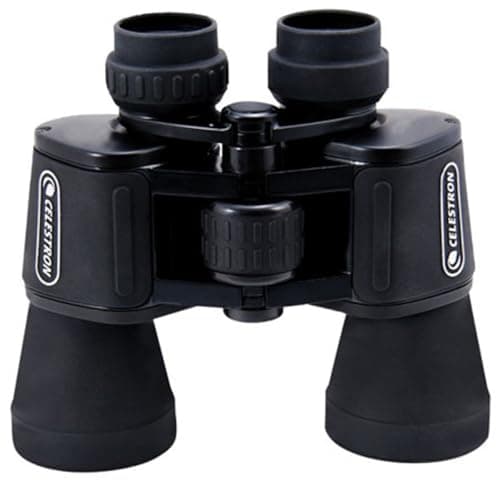 Celestron UpClose G2 10x50 The same 50mm objectives at 10x — tighter field, more reach, a 5mm exit pupil. | When the adult wants a pair too | $64.53 on Amazon #ad How we’re funded · price as of October 18, 2026 |
Rows link to the full write-up further down this page. Prices come from the live price layer only; where there is no live figure the button reads “Check price” rather than showing a number we remembered.
4. The notebook, and why it is not sentimental
One line per session: the date, what you looked at, what you saw. It takes thirty seconds and it is the cheapest way we know of to turn a single night into a habit.
It works because it converts a passive experience into a collection, and children who collect keep going. It also produces something genuinely satisfying to read a year later, when the entries have gone from *a bright dot* to *four moons, two on each side*.
5. The things you do not need
The accessory aisle in this category is mostly optimized for gift-buying rather than for use. Three we would skip on a first kit.
- Colored planetary filters. They do very little in a small telescope and add another thing to lose in the dark.
- A smartphone camera adapter. Fiddly, frustrating in the cold, and it turns an observing session into a photography session that will not go well. Later, maybe.
- Extra eyepieces, on day one. Learn the supplied ones first. When you do buy, buy one good mid-range eyepiece rather than a set of six.
If you want a fuller shopping list built around the same logic, stargazing extras is the gift-shaped version of this page, and gifts under $50 covers the whole budget.
The kit, priced honestly
We are not going to print a total, because we do not publish prices we cannot verify — every figure on this site comes from our live price layer with the date it was checked, and where there is no live figure the button reads *check price* instead of showing a number we remembered.
What we will say is the ordering, and it is stable regardless of price: red light first, warmth second, app third, notebook fourth, and optics after all of them. That order surprises people, and it is the most useful thing on this page.
Questions people actually ask
- Why do astronomers use red flashlights?
- Red light at low intensity preserves dark adaptation far better than white light does. Since eyes take twenty to thirty minutes to adapt and one white light resets them, a red torch protects the whole session.
- What do you need for stargazing with kids?
- A red torch, a free planetarium app, warm layers and something to sit on, and a notebook. Optics come after all of those in terms of how much they change the night.
- Do you need a telescope to go stargazing?
- No. Binoculars, or nothing at all, work well for constellations, the Milky Way and meteor showers. A telescope adds planetary detail, not the ability to enjoy the sky.
- How do you keep kids warm while stargazing?
- One more layer than feels necessary, something to sit or lie on, gloves that let a finger out, and a hot drink. Cold ends more sessions than cloud does.
Sources
Read next
Where to go from here
- Stargazing apps for kids, used properly
A planetarium app closes the biggest skill gap in stargazing and wrecks dark adaptation doing it. How to get one without the other.
- What to buy a kid who already has a telescope
A telescope's real problems are dark adaptation, steadiness and knowing where to point it. None of them cost much to fix.
- Your first night with a telescope
Do these eight things in this order and night one works. Most first nights fail on sequence, not on equipment.
- The best binoculars for stargazing with kids
The exit pupil calculation that decides which binoculars suit a child, and what a 7x50 actually shows on a first clear night.
- Space gifts for kids under $50
Under $50 you can buy genuinely good optics — just not a telescope. What the money actually buys, and the allocation we would make ourselves.
- Why can't I see anything through my telescope?
The ranked causes of a telescope that shows nothing, most common first, each with a fix you can do tonight without tools.
- 7x50 versus 10x42: which for a child, and why
The exit pupil arithmetic that settles the classic binocular argument, and why the answer is different for a child than for an adult.