Gifts
Space gifts for kids under $50
Enough for real optics. Not enough for a real telescope. Here is why.

By Scooter M. · published September 1, 2026
I'm not an astronomer and I don't have a lab. I'm someone who's genuinely into this — I read the manuals, compile the published specs, and do the arithmetic the box doesn't do for you. No lab coat. How we pick.
How this is funded. Lens & Lightyear earns a commission when you buy through a link on this page, at no extra cost to you. It does not change which products we pick or what we say about them — every card below carries a real reason to skip it. Prices are pulled live and were last verified October 18, 2026. Full disclosure.
The short answer
Under $50 buys genuinely good optics, and it does not buy a usable telescope. A pair of 7x50 binoculars shows more real astronomy at this price than any telescope on the shelf, because binoculars cannot be sold on a magnification number the optics do not support.
Why not a telescope
We are not being snobbish about this, and it is not a nudge toward spending more. It is arithmetic.
A telescope's useful magnification is capped at roughly twice its aperture in millimeters. Under $50, the aperture available is around 50mm, giving an honest ceiling near 100x. But magnification is free to advertise — a shorter eyepiece costs pennies — so telescopes at this price are routinely sold with eyepiece and Barlow combinations reaching four times what the optics can deliver.
What happens next is predictable. The child fits the most impressive-sounding eyepiece, points at Jupiter, sees a dim wobbling smudge, and concludes the telescope is broken or that space is boring. We work the full example through on toy brands versus real optics.
Quick picks
Astronomy gifts under $50
| # | Product | Best for | Price |
|---|---|---|---|
| 1 | 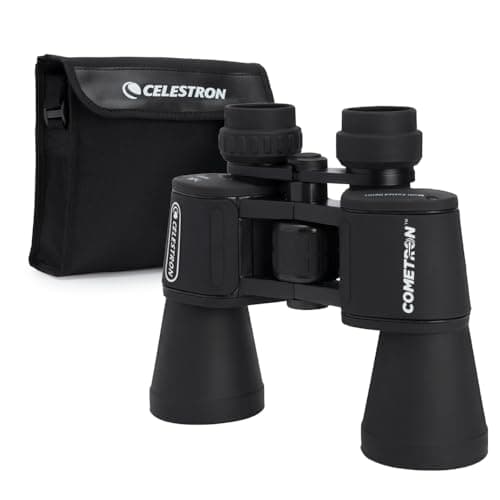 Celestron Cometron 7x50 50mm objectives, 7.1mm exit pupil, and it works the moment it is unwrapped. | The best astronomy at this budget, by a distance | |
| 2 | 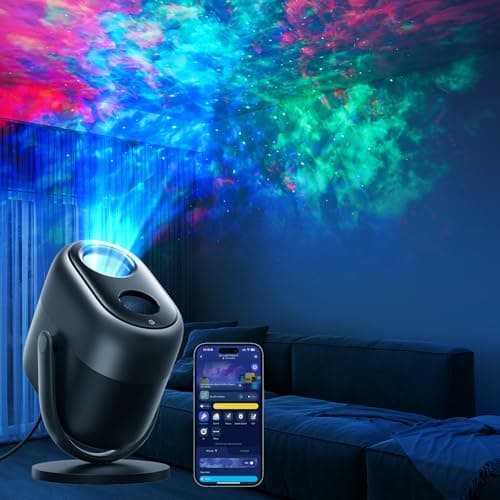 Govee Star Light Projector with Nebula Effect 540 sq ft of coverage at 25 dB — quiet enough to fall asleep beside. | A room they will love, tonight | |
| 3 | 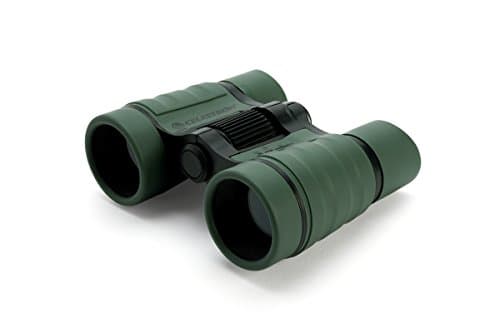 Celestron Celestron Kids 4x30 4.7 oz, a 7.5mm exit pupil, and small enough for a four-year-old to carry. | A very young child, and something they own | $9.95 on Amazon #ad How we’re funded · price as of October 18, 2026 |
| 4 | 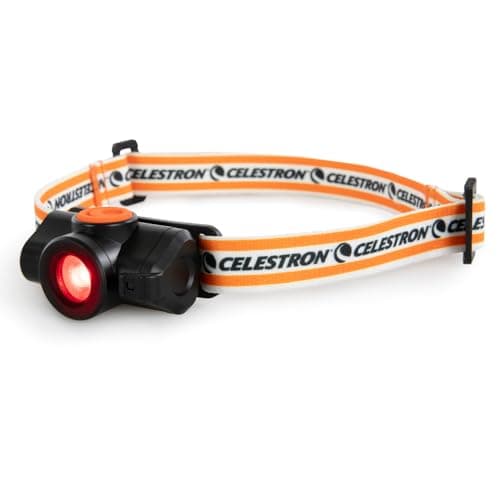 Celestron Night Vision Red Headlamp A 1-lumen red low beam, hands free, running 100 hours on two AAA cells. | The cheapest thing here that changes the most |
Rows link to the full write-up further down this page. Prices come from the live price layer only; where there is no live figure the button reads “Check price” rather than showing a number we remembered.
The allocation we would actually make
If we had $50 and a child who is interested in space, here is exactly what we would do with it.
- A pair of 7x50 binoculars. Most of the budget. This is the instrument, and it will still be in use in five years.
- A free planetarium app on a phone. Costs nothing, and it is what turns *looking up* into *finding things*. Point the phone at the sky and it labels what is there.
- A red torch, if there is anything left. Preserves dark adaptation, which is the difference between seeing a dozen stars and seeing hundreds.
- A blanket. Genuinely. Lying on your back on a lawn is the most comfortable way to use binoculars and the most comfortable way to look up, and it solves the weight problem for free.
That combination produces better first three months than any $50 telescope, and if the interest sticks through a winter, you then buy a real telescope with real aperture knowing it will be used. That sequence produces far more young astronomers than a cheap telescope at Christmas does.
What else $50 does and does not buy
| Gift | Under $50? | Verdict |
|---|---|---|
| 7x50 astronomy binoculars | Yes | The best astronomy per dollar available at any price. Buy these. |
| Decorative star projector | Yes | Genuinely lovely bedroom light. Not astronomy, and that is fine. |
| Red LED torch | Yes | Small, unexciting, and improves every night out more than most upgrades. |
| Compact kids binoculars | Yes | The right answer for a child under about six who cannot hold a full-size pair. |
| A usable telescope | No | The aperture available at this price is sold on inflated magnification. |
| An accurate star projector | No | The etched optical disc is the expensive part and there is no cheap version. |
| A decent star atlas | Usually | A spiral-bound atlas that lies flat on a table beats a phone at night, and lasts decades. |
If the budget can stretch
The next real threshold is around $80 to $100, where a 70mm to 76mm telescope with honest optics becomes available. That is a genuine step change rather than a marginal improvement — see telescopes under $100.
But we would rather you spent $45 on binoculars than $70 on a telescope that oversells itself. Between $50 and $80 the telescope shelf gets worse before it gets better, and buying at the bottom of it is the most common way this goes wrong.
The picks in full
Pick 1
Celestron Cometron 7x50
The best astronomy at this budget, by a distance
The arithmetic
Exit pupil is objective divided by magnification: 50 / 7 = 7.1mm, which matches Celestron's published figure. That is the single most useful number here. A fully dark-adapted young pupil opens to around 7mm, so a child uses nearly all of that 7.1mm cone and the view is as bright as the optics can make it. An adult over about forty typically dilates to 5mm or less and simply cannot use the extra — this is one of the rare cases where a child gets more out of the hardware than the grown-up does.
This is the answer to the whole page. At this budget, a pair of 7x50 binoculars shows more real astronomy than any telescope you can buy, and it is not close.
50mm objectives per side, a 7.1mm exit pupil that matches a dark-adapted young eye, and a 6.6 degree field that makes finding things effortless. No assembly, no alignment, no learning curve.
Night one, realistically: lunar craters and mountain shadows, up to four of Jupiter's moons in a line, the Pleiades filling the field with blue-white stars, and on a dark night the Milky Way resolving into individual points. That is a serious night's observing.
Water resistant rather than waterproof, BK7 prisms that soften slightly at the field edge, and 13mm of eye relief that is marginal over glasses. Honest compromises at the price, none of which affect the view of the Moon.
Skip it if
The child is under about seven and will hold them unsupported. 27.3 oz is a lot for small arms, and without a wall to lean on or a blanket to lie on, sessions will be short.
| Magnification | 7x |
|---|---|
| Objective lens | 50mm (1.97") |
| Prism glass | BK7 porro |
| Lens coatings | Multi-coated |
| Angular field of view | 6.6 degrees |
| Linear field at 1000 yds | 344 ft (105 m) |
| Exit pupil | 7.1mm (.28") |
| Eye relief | 13mm (.51") |
| Close focus | 26.2 ft (8 m) |
| Weight | 27.3 oz (774 g) |
| Tripod adaptable | Yes |
| Environmental | Water resistant |
| What the box does not do | 27.3 oz is heavy for small arms held up at the sky — plan on leaning against a wall or lying on a blanket, or add the tripod adapter. BK7 prisms are the cheaper glass and show slight softening at the edge of the field. Water resistant is not waterproof. |
Specifications from Celestron — Cometron 7x50mm specifications. We have not handled this one — everything above is the published spec sheet plus our own arithmetic on it.
Pick 2
Govee Star Light Projector with Nebula Effect
A room they will love, tonight
The arithmetic
25 dB is the specification that matters in a child's bedroom and the one nobody checks — roughly the level of a quiet library, which is quiet enough to fall asleep next to. 540 sq ft of coverage will fill an ordinary bedroom ceiling with room to spare, and is in fact 79 percent more area than the far more expensive Galaxy 2 Pro covers.
The other honest use of this budget, and it is a good present rather than a consolation prize.
540 square feet of coverage fills an ordinary bedroom ceiling, and the 7-zone nebula rendering produces the layered drifting effect people buy these for.
25 dB is the specification that decides whether it gets used. That is roughly library quiet, which means it runs while a child falls asleep rather than being switched off at bedtime. Almost nobody else in this category publishes a noise figure at all.
It is decorative rather than astronomical, and we would rather say that plainly than let you find out. For real constellations you need an optical planetarium, which costs meaningfully more — see accurate versus decorative.
Skip it if
The child is genuinely interested in astronomy. The star field is decorative and corresponds to nothing in the real sky, so it will not support a growing interest. As a bedroom light it is excellent.
| Model | H6095 |
|---|---|
| Nebula rendering | 7 independent light zones, 7 RGBW lamp beads with 7 independent IC chips |
| Coverage area | 540 square feet |
| Noise level | Less than 25 dB |
| Scene modes | 50+ |
| White noise options | 18 |
| Control | Function button, Govee Home app, voice, Matter |
| Connectivity | 2.4GHz Wi-Fi and Bluetooth |
| Voice assistants | Alexa and Google Assistant |
| Power | 10 W; 5 V DC 3 A input, 100-240 V adapter |
| Dimensions | 5.51 x 6.18 x 8.94" |
| Weight | 1.6 kg |
| What the box does not do | Decorative only: the star field is a pattern, not a sky. No optical discs, so what you see on night one is what you see on night two hundred. Needs the app for most of its features. |
Specifications from Govee — Star Light Projector with Nebula Effect. We have not handled this one — everything above is the published spec sheet plus our own arithmetic on it.
Pick 3
Celestron Celestron Kids 4x30
A very young child, and something they own
The arithmetic
4.7 oz is the whole point: about a sixth of the weight of a 7x50, which is the difference between a four-year-old using them and a four-year-old putting them down. 30 / 4 = 7.5mm exit pupil, so the view is bright. But 4x is genuinely low magnification — this is a first pair of real optics for very small hands, not a stargazing instrument.
The pick for a small child, where the constraint is not budget but what they can physically hold.
4.7 ounces against 27 for a full-size astronomy pair. That is the entire reason to buy them, and it is a good reason: a four-year-old will carry these round a park all afternoon.
The exit pupil is 30 divided by 4, which is 7.5mm — Celestron's published figure, and brighter than most adult binoculars deliver. The 4.3 degree field is narrow but easy to aim at low power.
5mm of eye relief is short and awkward over glasses, there is no weather sealing and no tripod thread. They come with a nylon case, an attached strap and a lens cloth.
Skip it if
The child is over about six. 4x is genuinely low magnification and they will find it limiting quickly. This is a first pair of real optics for small hands, not a stargazing instrument.
| Magnification | 4x |
|---|---|
| Objective lens | 30mm (1.18") |
| Lens coatings | Coated |
| Angular field of view | 4.3 degrees |
| Linear field at 1000 yds | 225 ft (68.58 m) |
| Exit pupil | 7.5mm (.29") |
| Eye relief | 5mm (.2") |
| Weight | 4.7 oz (133 g) |
| Environmental | Not weather sealed |
| Included | Woven nylon case, attached neck strap, lens cloth |
| What the box does not do | 5mm of eye relief is very short and makes them awkward over glasses. No weather sealing and no tripod thread. At 4x you will see the Moon as a slightly larger Moon; you will not resolve craters the way a 7x50 does. |
Specifications from Celestron — Celestron Kids 4x30mm Roof Binocular. We have not handled this one — everything above is the published spec sheet plus our own arithmetic on it.
#ad How we’re funded · price as of October 18, 2026
Pick 4
Celestron Night Vision Red Headlamp
The cheapest thing here that changes the most
The arithmetic
The cheapest thing on this site and the one that changes the most. Human eyes take 20 to 30 minutes to dark-adapt, and one glance at a white phone screen resets the clock — which is why so many first nights end with a child seeing almost nothing. Red light preserves that adaptation, and the number that matters here is the low setting: **1 lumen**. Most red lights sold for astronomy are far brighter than the job needs, and a red light that is too bright is only a slower way of destroying dark adaptation. The second number is 100 hours on that low beam, which is more clear nights than most families will use in a year.
The least exciting item we recommend and the one that most reliably improves a first night.
Human eyes need 20 to 30 minutes in darkness to reach full sensitivity, and a single glance at a white phone screen resets the clock for everyone present. That is why so many first nights end with a child seeing almost nothing.
Red light at low intensity preserves that adaptation. The number that matters is the low beam: 1 lumen, where most red lights sold for astronomy are far brighter than the job needs — and too-bright red is only a slower way of losing your night vision.
Being worn rather than held is the other half of it: a child at an eyepiece keeps both hands for the focuser, and the 45 degree tilt aims the beam at the chart rather than at whoever is standing opposite. Celestron publishes 62 g and 100 hours on the low beam; the two AAA cells are not in the box.
Skip it if
It is the only present. Nobody unwraps a headlamp with delight. Paired with binoculars or given to a child who already has a telescope, it is genuinely the most useful small thing on this site.
| Item number | 93581 |
|---|---|
| Light source | Red LED |
| Output | 1 lumen on low, 4 lumens on high |
| Modes | Low beam, high beam, blinking, SOS |
| Battery life | 100 hours on low, 25 hours on high |
| Power | 2 x AAA alkaline or lithium, user supplied |
| Beam angle | 45 degree adjustable tilt |
| Weight | 62 g (2.15 oz) |
| Dimensions | 58 x 35 x 30mm (2.28" x 1.42" x 1.18") |
| Included | Headlamp, elastic headband with adjusting clips, quick setup guide |
| Warranty | 2 year |
| What the box does not do | Batteries. Celestron supplies the headband and the quick setup guide but not the 2 AAA cells, so buy them in the same order. There is no continuous dimmer — brightness is two fixed steps rather than a wheel you can creep down — and the blinking and SOS modes are camping features that do nothing for astronomy. Being head-mounted it also points wherever the wearer looks, which takes a little discipline around other observers. |
Specifications from Celestron — Night Vision Red Headlamp. We have not handled this one — everything above is the published spec sheet plus our own arithmetic on it.
Questions people actually ask
- What space gift can I get for under $50?
- A pair of 7x50 astronomy binoculars is the best astronomy at this price. A decorative star projector is the alternative if the child wants an amazing bedroom rather than to see real objects.
- Can you buy a decent telescope for under $50?
- No. The aperture available at that price is around 50mm, giving an honest magnification ceiling near 100x, and telescopes at this price are typically sold with eyepiece combinations reaching four times that.
- What is the best cheap astronomy gift for a kid?
- Binoculars, a free planetarium app and a red torch. That combination costs less than the cheapest usable telescope and produces a much better first three months.
- Is a star projector a good gift under $50?
- As a bedroom light, yes — look for a published noise figure and a timer. As a way to support an interest in astronomy, no: accurate projectors with real star positions cost considerably more.
Sources
Read next
Where to go from here
- The best stargazing binoculars under $50
Under $50 binoculars outperform every telescope at the price. What the money buys in coatings and exit pupil, and the honest limits of the budget.
- The best space gifts for kids under $100
Binoculars, telescope, projector or accessory — the cross-category view of one budget, and why the best answer is usually not the telescope.
- The best binoculars for stargazing with kids
The exit pupil calculation that decides which binoculars suit a child, and what a 7x50 actually shows on a first clear night.
- The best kids' telescopes under $100
The sub-$100 shelf is where the 525x claims live. What that money genuinely buys, and the one telescope here we tell you not to buy.
- The best star projector under $50
The sub-$50 shelf is where most of this category lives and where the specifications get least reliable. What to check and what to ignore.
- What to buy a kid who already has a telescope
A telescope's real problems are dark adaptation, steadiness and knowing where to point it. None of them cost much to fix.
- How much should you spend on a telescope for a child?
Band by band, what the money buys and where it stops helping. The jump from $60 to $150 matters more than the one above it.
- Are kids' telescopes worth it?
A direct verdict with the honest nuance: where the money starts working, where it does not, and what to buy instead below the line.