Binoculars
Celestron Kids 4x30 review
The cheapest thing on this site, picked more often than most of the expensive ones. Here is exactly what it is for.
By Scooter M. · published October 18, 2026
I'm not an astronomer and I don't have a lab. I'm someone who's genuinely into this — I read the manuals, compile the published specs, and do the arithmetic the box doesn't do for you. No lab coat. How we pick.
How this is funded. Lens & Lightyear earns a commission when you buy through a link on this page, at no extra cost to you. It does not change which products we pick or what we say about them — every card below carries a real reason to skip it. Prices are pulled live and were last verified October 18, 2026. Full disclosure.
The short answer
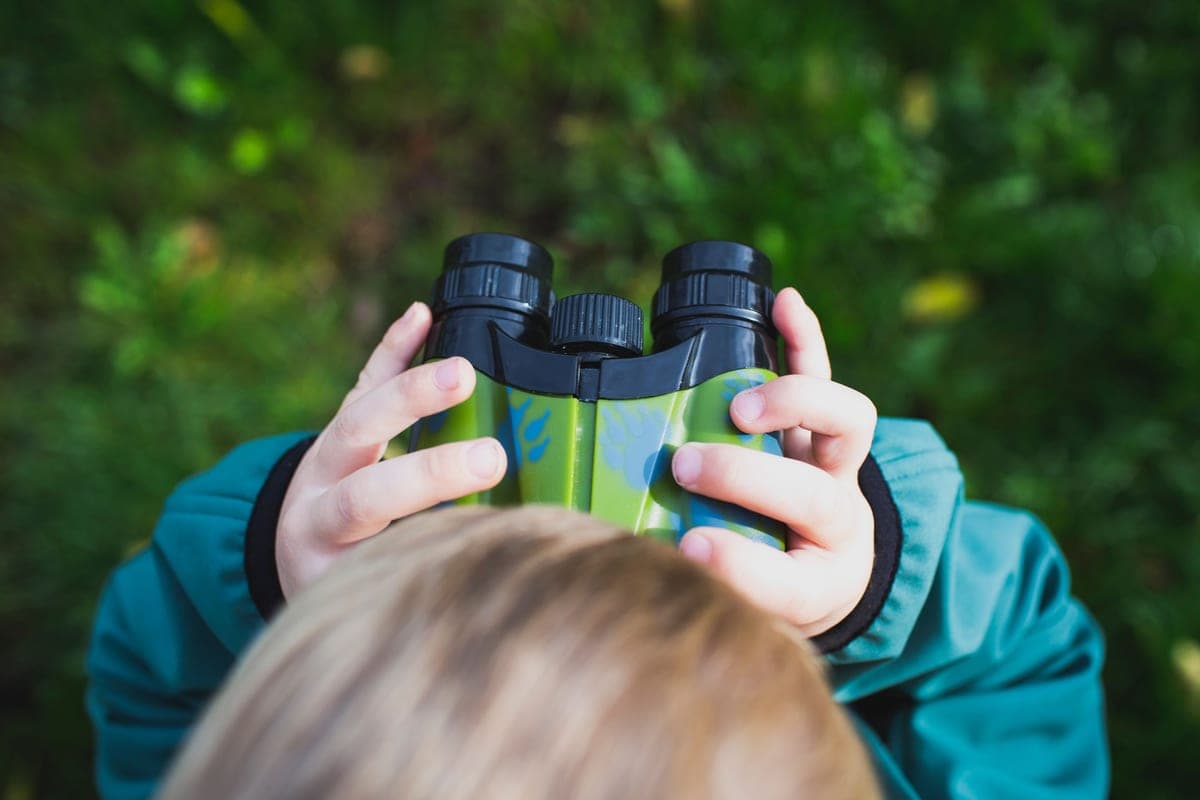
Yes, for a three to six year old, as a first real optic rather than a stargazing tool. At 4.7 oz they are light enough that a small child actually keeps using them, and the 7.5mm exit pupil makes the view bright. At 4x magnification they are a daylight instrument that occasionally looks at the Moon, and at this price that is a fair deal.
This is the least expensive thing on the site and it is picked on seven pages, which makes it worth a page of its own — mostly so that what it is not does not come as a surprise.
The full published specification
| Specification | Celestron Kids 4x30 |
|---|---|
| Magnification | 4x |
| Objective lens | 30mm (1.18") |
| Exit pupil | 7.5mm (.29") |
| Eye relief | 5mm (.2") |
| Angular field of view | 4.3 degrees |
| Linear field at 1000 yds | 225 ft (68.58 m) |
| Lens coatings | Coated |
| Weight | 4.7 oz (133 g) |
| Environmental | Not weather sealed |
| Tripod thread | None |
| Included | Woven nylon case, attached neck strap, lens cloth |
Celestron's published specifications, linked below. Bold marks the two figures that justify the product — and note that eye relief and weather sealing are where the price shows.
Why 4.7 oz is the whole argument
The failure mode for binoculars given to small children is not optical. It is that the child cannot hold them up. A 7x50 weighs around a pound and a half; after thirty seconds a four-year-old's arms are down and the moment is gone.
At 4.7 oz this pair removes that problem entirely, and everything else about it follows from the decision to prioritize weight. Low magnification means small, light prisms. A 30mm objective means a small, light front end. The optical compromises are real, and they are the price of a binocular a small child will actually raise to their eyes a second time.
- 4.7 oz — roughly a sixth of a 7x50, and about a fifth of the Nature DX 8x42's 22.2 oz.
- 7.5mm exit pupil — 30 divided by 4. Wider than the eye can use, so brightness is never the limit.
- 4.3 degrees of field — narrow for the magnification, so expect some hunting to find a target.
- 5mm of eye relief — short. Fine for a child without glasses, awkward for one with them.
Quick picks
The 4x30, and the two pairs a child graduates to
| # | Product | Best for | Price |
|---|---|---|---|
| 1 | 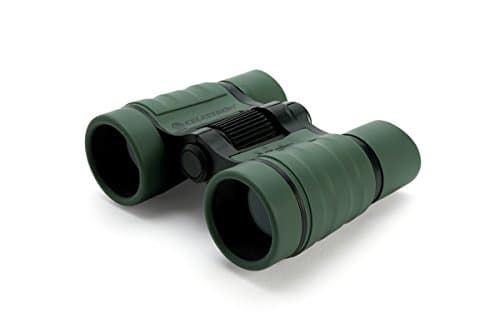 Celestron Celestron Kids 4x30 4.7 oz with a 7.5mm exit pupil — light enough to actually get used. | A first real optic for a three to six year old, at pocket-money price | $9.95 on Amazon #ad How we’re funded · price as of October 18, 2026 |
| 2 | 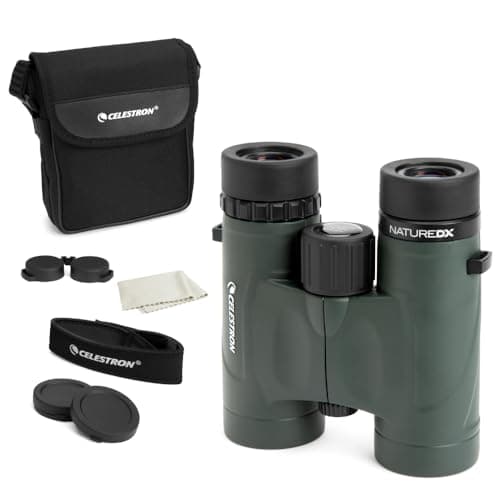 Celestron Nature DX 8x32 8x on 32mm objectives, waterproof, with proper eye relief and real coatings. | The next step up, around seven or eight | $90.97 on Amazon #ad How we’re funded · price as of October 18, 2026 |
| 3 | 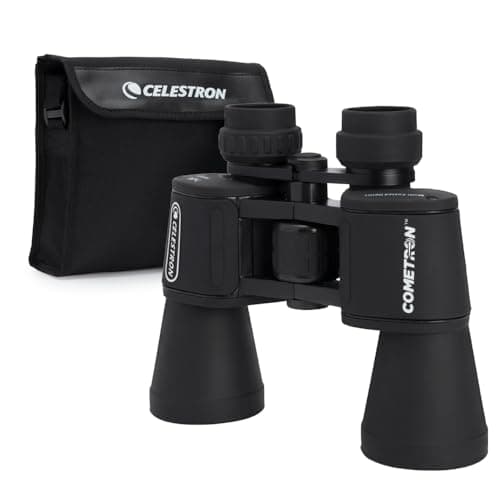 Celestron Cometron 7x50 50mm objectives at 7x — a 7.1mm exit pupil and a genuinely capable night instrument. | When stargazing specifically becomes the point |
Rows link to the full write-up further down this page. Prices come from the live price layer only; where there is no live figure the button reads “Check price” rather than showing a number we remembered.
What a child will actually see
| Target | At 4x | Honest verdict |
|---|---|---|
| Garden birds, insects, flowers | Clearly bigger and brighter | The real use case. Excellent at this. |
| Ducks on a pond, distant animals | Noticeably closer | Works well — bright and easy to aim. |
| The Moon | A slightly larger Moon | Some surface mottling; no crater detail |
| Star clusters like the Pleiades | More stars than the naked eye | A genuine, if modest, gain |
| Planets | Still points of light | No. 4x is nowhere near enough. |
| Jupiter's moons | Not resolved | No. Needs 7x or more, steadily held. |
The interpupillary point nobody checks
A small child's eyes are closer together than an adult's, and many adult binoculars will not close far enough to let a young child see a single merged circle. Instead they see two overlapping images and conclude the binoculars are broken.
A purpose-made kids' binocular is built to hinge closed far enough for small faces, and that compatibility is a large part of what the money buys here. We go into the specification properly on binoculars for kids by age.
Who it is genuinely for
| Situation | Verdict |
|---|---|
| A three to six year old's first binocular | Yes. This is the pick. |
| A stocking filler or add-on gift | Yes — see space gifts under $50. |
| Daytime nature watching with a small child | Yes. The core use case. |
| Stargazing as the main purpose | No. 4x is not enough; see binoculars for stargazing. |
| A child who wears glasses | Probably not. 5mm of eye relief is very short. |
| Rough outdoor use in bad weather | No. Not weather sealed. |
What we did and did not do
We have not tested these binoculars. Every figure above was read from Celestron's published specification page on the date at the top of this page, linked below. The 7.5mm exit pupil is our arithmetic on Celestron's published aperture and magnification — 30 divided by 4 — and matches the figure they publish.
No rating and no review count appear here, because we have measured nothing. Prices come only from our live feed with the date they were checked. Our full method is on the methodology page.
The picks in full
Pick 1
Celestron Celestron Kids 4x30
A first real optic for a three to six year old, at pocket-money price
The arithmetic
4.7 oz is the whole point: about a sixth of the weight of a 7x50, which is the difference between a four-year-old using them and a four-year-old putting them down. 30 / 4 = 7.5mm exit pupil, so the view is bright. But 4x is genuinely low magnification — this is a first pair of real optics for very small hands, not a stargazing instrument.
The specification that justifies this product is 4.7 oz. That is about a sixth of the weight of a 7x50, and it is the difference between a four-year-old using binoculars and a four-year-old putting them down after a minute. Arm fatigue ends more sessions at this age than optics ever do.
The second number is better than the price suggests: 30 divided by 4 gives a 7.5mm exit pupil, which is wider than any human eye can fully use. The view is bright. Celestron did the sensible thing here, pairing a modest objective with very low magnification rather than inflating the magnification number on the box.
4x is genuinely low, and that is the honest limitation. A 4.3 degree field — 225 ft at 1000 yards — is narrow for the magnification, so finding things takes patience. The Moon will look slightly bigger, not detailed.
The real use case is daylight: insects, flowers, garden birds, ducks on a pond. Treated as a first daytime instrument that occasionally gets pointed at the Moon, it is excellent value. Treated as a stargazing purchase, it disappoints.
Other honest downsides: 5mm of eye relief is very short and awkward over glasses, there is no weather sealing, and no tripod thread. The woven nylon case, attached neck strap and lens cloth are included, and the strap being attached matters more than it sounds with small children.
Skip it if
You want a stargazing instrument. At 4x the Moon is a slightly larger Moon; you will not resolve craters the way a 7x50 does. Also skip it if the child wears glasses — 5mm of eye relief is very short.
| Magnification | 4x |
|---|---|
| Objective lens | 30mm (1.18") |
| Lens coatings | Coated |
| Angular field of view | 4.3 degrees |
| Linear field at 1000 yds | 225 ft (68.58 m) |
| Exit pupil | 7.5mm (.29") |
| Eye relief | 5mm (.2") |
| Weight | 4.7 oz (133 g) |
| Environmental | Not weather sealed |
| Included | Woven nylon case, attached neck strap, lens cloth |
| What the box does not do | 5mm of eye relief is very short and makes them awkward over glasses. No weather sealing and no tripod thread. At 4x you will see the Moon as a slightly larger Moon; you will not resolve craters the way a 7x50 does. |
Specifications from Celestron — Celestron Kids 4x30mm Roof Binocular. We have not handled this one — everything above is the published spec sheet plus our own arithmetic on it.
#ad How we’re funded · price as of October 18, 2026
Pick 2
Celestron Nature DX 8x32
The next step up, around seven or eight
The arithmetic
32 / 8 = 4mm exit pupil — dimmer at night than either 50mm pair above, and that is the honest trade. What you get for it: 18 oz instead of 27, which a seven-year-old can actually hold steady; 17.5mm of eye relief, so a child in glasses sees the full field; 6.5 ft close focus, so it works on a ladybird in the garden as well as the Moon; and genuinely waterproof rather than water resistant. This is the pair that gets used on Tuesday afternoon, not just on a clear Saturday night.
The natural graduation. Real phase-coated roof prisms, a waterproof nitrogen-filled body and enough magnification to make stargazing worthwhile.
It is also light enough — meaningfully lighter than a 42mm pair — for a child to hold without the session ending early.
Honest downside: it is a real optical purchase at a real optical price. Full review.
Skip it if
The child is still under about six, or the budget is the point. This costs many times the 4x30 and weighs considerably more.
| Magnification | 8x |
|---|---|
| Objective lens | 32mm (1.26") |
| Prism glass | BaK-4 roof, phase coated |
| Lens coatings | Fully multi-coated |
| Angular field of view | 7.4 degrees |
| Linear field at 1000 yds | 388 ft (129 m) |
| Exit pupil | 4mm (.157") |
| Eye relief | 17.5mm (.69") |
| Close focus | 6.5 ft (2 m) |
| Weight | 18 oz (510 g) |
| Tripod adaptable | Yes |
| Environmental | Waterproof |
| What the box does not do | A 4mm exit pupil means noticeably dimmer star fields than a 7x50 — the Milky Way will not leap out of it. It costs meaningfully more than the porro pairs above, and none of that money is buying you light. |
Specifications from Celestron — Nature DX 8x32mm specifications. We have not handled this one — everything above is the published spec sheet plus our own arithmetic on it.
#ad How we’re funded · price as of October 18, 2026
Pick 3
Celestron Cometron 7x50
When stargazing specifically becomes the point
The arithmetic
Exit pupil is objective divided by magnification: 50 / 7 = 7.1mm, which matches Celestron's published figure. That is the single most useful number here. A fully dark-adapted young pupil opens to around 7mm, so a child uses nearly all of that 7.1mm cone and the view is as bright as the optics can make it. An adult over about forty typically dilates to 5mm or less and simply cannot use the extra — this is one of the rare cases where a child gets more out of the hardware than the grown-up does.
The answer when a child who started with the 4x30 wants to actually see things at night.
7x is the most forgiving magnification to hold, and 50mm objectives collect enough light for star clusters and real lunar detail.
Honest downside: bulk and no weather sealing. Full review.
Skip it if
Small hands. This is a big, heavy pair and a young child will not hold it steady without support.
| Magnification | 7x |
|---|---|
| Objective lens | 50mm (1.97") |
| Prism glass | BK7 porro |
| Lens coatings | Multi-coated |
| Angular field of view | 6.6 degrees |
| Linear field at 1000 yds | 344 ft (105 m) |
| Exit pupil | 7.1mm (.28") |
| Eye relief | 13mm (.51") |
| Close focus | 26.2 ft (8 m) |
| Weight | 27.3 oz (774 g) |
| Tripod adaptable | Yes |
| Environmental | Water resistant |
| What the box does not do | 27.3 oz is heavy for small arms held up at the sky — plan on leaning against a wall or lying on a blanket, or add the tripod adapter. BK7 prisms are the cheaper glass and show slight softening at the edge of the field. Water resistant is not waterproof. |
Specifications from Celestron — Cometron 7x50mm specifications. We have not handled this one — everything above is the published spec sheet plus our own arithmetic on it.
Questions people actually ask
- Are the Celestron Kids 4x30 binoculars any good?
- For a three to six year old, yes. At 4.7 oz they are light enough that a small child keeps using them, and the 7.5mm exit pupil makes the view bright. They are a daylight nature instrument rather than a stargazing one — at 4x the Moon looks only slightly larger.
- What age are the Celestron Kids 4x30 for?
- About three to six. Below three a child will struggle to aim them; by about seven most children can handle an 8x32 and will find 4x too weak to be interesting.
- Can you see the Moon with 4x30 binoculars?
- You can see the Moon, and some broad surface mottling, but not crater detail. Four times magnification is not enough for that — a 7x50 or 10x50 pair shows considerably more.
- Are 4x30 binoculars good for stargazing?
- Only marginally. The bright 7.5mm exit pupil means they show more stars than the naked eye and work on large open clusters like the Pleiades, but 4x is too little magnification for planets or lunar detail.
- Do the Celestron Kids binoculars work for children who wear glasses?
- Not comfortably. Celestron publishes 5mm of eye relief, which is very short, so a child wearing glasses will struggle to see the full field.
- Are they waterproof?
- No. Celestron lists them as not weather sealed, so they are a fair-weather and indoor instrument. A woven nylon case, an attached neck strap and a lens cloth are included.
Sources
Read next
Where to go from here
- Binoculars for kids, by age
What a child can physically hold at each age, and which published weight and eye-relief figures to check before buying.
- Celestron Nature DX 8x32 review
A third lighter than a 7x50, waterproof, and it focuses down to 6.5 feet. What that buys by day, and exactly what it costs you at night.
- The best stargazing binoculars under $50
Under $50 binoculars outperform every telescope at the price. What the money buys in coatings and exit pupil, and the honest limits of the budget.
- One pair for birds and stars: what to give up
Birding and astronomy want opposite specifications. What a single pair can honestly do, and which compromise suits a child best.
- Space gifts for kids under $50
Under $50 you can buy genuinely good optics — just not a telescope. What the money actually buys, and the allocation we would make ourselves.
- What age is a telescope right for?
What a child can genuinely do at five, seven, nine and eleven, and what to buy at each stage instead of guessing.