Gifts
The best space gifts for kids under $100
One budget, four categories. Which one wins depends on the child, not the price.

By Scooter M. · published September 6, 2026
I'm not an astronomer and I don't have a lab. I'm someone who's genuinely into this — I read the manuals, compile the published specs, and do the arithmetic the box doesn't do for you. No lab coat. How we pick.
How this is funded. Lens & Lightyear earns a commission when you buy through a link on this page, at no extra cost to you. It does not change which products we pick or what we say about them — every card below carries a real reason to skip it. Prices are pulled live and were last verified October 21, 2026. Full disclosure.
The short answer
Under $100, buy 7x50 binoculars unless a telescope was specifically requested. They show more on night one than any telescope at this price, need no setup, and cannot be pointed wrongly. Add a red torch with whatever is left — it improves what a child sees more than spending the same money on optics would.
This page is deliberately cross-category. Most $100 gift guides in this niche are telescope guides with a budget filter applied, which quietly assumes the answer before asking the question. At this particular budget the telescope is often the wrong buy, and that is worth saying on the page rather than in a footnote.
What $100 buys in each category
| Category | What this budget gets you | Verdict at this price |
|---|---|---|
| Binoculars | 50mm objectives, real multi-coated optics, a 7.1mm exit pupil | The best value in the category. Nothing is compromised to hit the price. |
| Telescopes | 70-76mm of honest optics, a basic mount, no finder or a red dot | Viable from about $60. Below that, the numbers on the box stop being real. |
| Star projectors | Decorative nebula projectors, or the entry end of accurate ones | Depends entirely on the child. Indoors, weatherproof, works in a city. |
| Accessories | A red torch, a planisphere, a good eyepiece | Punches far above its price, and is almost never bought. |
Budget bands describe what the category offers at this price, not specific product prices. Live prices appear on the buy buttons where our price feed has them.
Quick picks
The best of each category at this budget
| # | Product | Best for | Price |
|---|---|---|---|
| 1 | 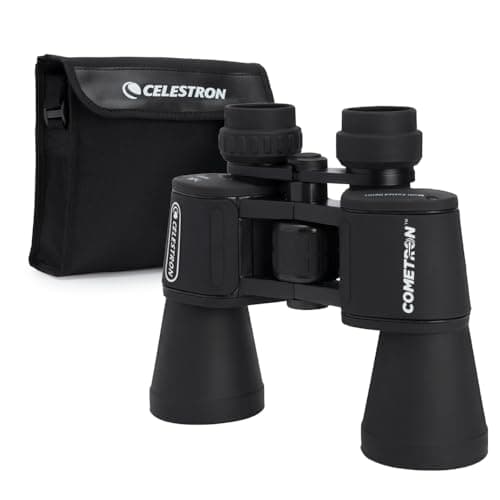 Celestron Cometron 7x50 A 7.1mm exit pupil matched to a child's dark-adapted eye, and a five-second setup. | The best space gift under $100, full stop | |
| 2 | 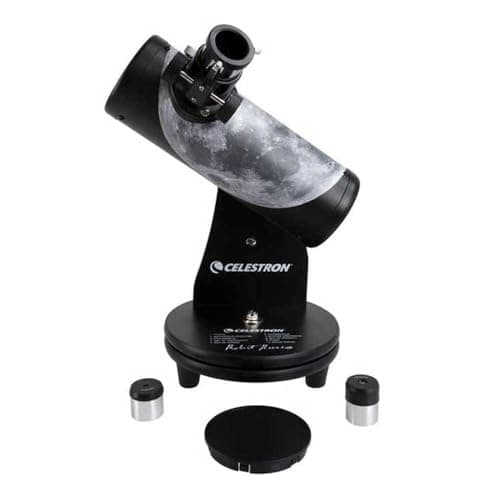 Celestron FirstScope 76mm Tabletop 76mm of aperture, no assembly, and no invented magnification anywhere on the box. | When it has to be a telescope | |
| 3 | 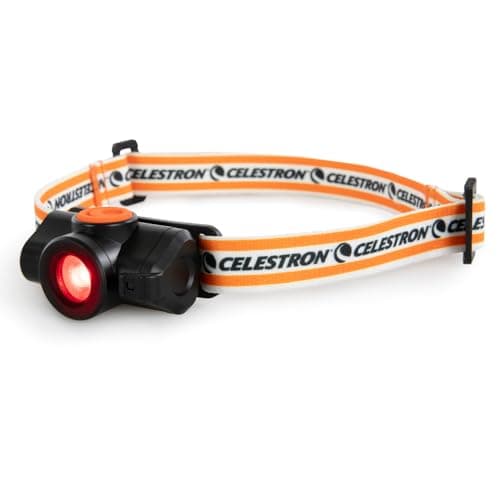 Celestron Night Vision Red Headlamp A 1-lumen red low beam, worn rather than held — it protects the dark adaptation everything else depends on. | The cheapest thing here, and the one that changes most |
Rows link to the full write-up further down this page. Prices come from the live price layer only; where there is no live figure the button reads “Check price” rather than showing a number we remembered.
How to choose between the four
- Did the child ask for something specific by name? If they asked for a telescope, buy the telescope. Optics are not the only thing being given, and substituting something technically better reads as a substitution.
- Will an adult go outside in the cold with them? If not, buy the projector. A telescope that waits for an enthusiastic adult is a telescope that waits.
- How old are they? Under six, weight and attention span decide it — a projector or very light binoculars. Seven and up, the binoculars or the telescope open up. See gifts by age.
- Do you live somewhere with a view of the sky? A lit balcony with no horizon still works for the Moon and planets, which are bright enough to punch through anything. Fainter targets will not, whatever you spend.
What each category delivers on night one
Budget guides usually compare specifications. What a gift buyer actually wants to know is what happens on the first clear evening, so here is that instead.
| 7x50 binoculars | 70-76mm telescope | Star projector | |
|---|---|---|---|
| Time from box to first view | Under a minute | 20-30 minutes the first time | About a minute |
| The Moon | Craters along the terminator | Craters, mountains and shadows — the best of the three | Not applicable |
| Jupiter | Four moons as points beside it | A disc plus the moons, and belts on a steady night | Not applicable |
| Saturn's rings | No — not at 7x | Yes, as an oval from about 50x | No |
| The Pleiades | The whole cluster at once | Too wide for the field | Depends on the disc |
| Works from a lit city | Moon and planets only | Moon and planets only | Yes, entirely |
| Works when it is cloudy | No | No | Yes |
| Number of ways it can go wrong | Almost none | Finder, focus, mount, eyepiece choice | Almost none |
Bold marks the winner in each row. No column wins more than four, which is why this page is cross-category rather than a telescope list with a price filter.
The last row is what decides it for most families. A telescope has four independent ways to disappoint on the first evening, and every one of them is avoidable — but only if somebody has read why can't I see anything before the box is opened rather than after it has already gone wrong.
Matching this budget to the age
| Age | What we would buy at this budget | Why |
|---|---|---|
| 4-6 | A projector, or very light binoculars | Weight and attention span are the limits here, not optics. See ages 5-6. |
| 7-8 | 7x50 binoculars, plus the red torch | Old enough for real optics, not yet patient enough for alignment. See ages 7-8. |
| 9-10 | A 76mm tabletop telescope, if you have a surface for it | The age at which setup becomes achievable alone, which is when a telescope starts getting used on a whim. See ages 9-10. |
| 11-12 | Binoculars now, and save toward real aperture | At this age a $100 telescope gets outgrown quickly. Waiting and buying properly serves them better — see ages 11-12. |
What this budget cannot do
Being straight about the ceiling is more useful than stretching the claims. Under $100 you are not getting:
- A steady tripod. Mount stiffness is the first thing manufacturers cut, and it is the most common reason a cheap telescope feels broken.
- Phone-guided finding. That starts higher up — see telescopes under $200.
- Aperture above about 76mm. Which means faint galaxies and nebulae stay faint. The Moon and planets are unaffected.
- A scientifically accurate planetarium. The accurate projectors start above this band; below it they are decorative, which we untangle on accurate vs decorative.
None of that stops this budget producing a genuinely good first year. It just means knowing which promises on the packaging are not being kept, which is what the space gifts not to buy is for.
Where this sits against our other budget pages
- [Space gifts under $50](/gifts/under-50) — the band below this one, where the choices narrow sharply and accessories start to win outright.
- [Kids' telescopes under $100](/telescopes/under-100) — the same budget, telescopes only, including the one on that shelf we tell you to walk past.
- [Beginner telescopes under $200](/telescopes/under-200) — the band above, where a steady mount or phone-guided finding becomes affordable.
- [How much to spend](/guides/how-much-to-spend) — the full band-by-band reasoning, with the arithmetic.
Questions people actually ask
- What is the best space gift for a child under $100?
- A pair of 7x50 binoculars, unless a telescope was specifically requested. They need no setup, cannot be aimed wrongly, and show lunar craters, Jupiter's moons and the Pleiades on the first clear night.
- Can you get a decent telescope for under $100?
- From about $60 upward, yes — a 70mm to 76mm with honest published specifications. Below that the magnification claims stop matching what the optics can deliver.
- Is a star projector a good gift under $100?
- For a younger child, in bad weather, or in a home with no view of the sky, genuinely yes. At this budget most are decorative rather than astronomically accurate, so buy one knowing which you are getting.
- What is the best cheap astronomy accessory?
- A red torch with variable brightness. Eyes take twenty to thirty minutes to dark-adapt and one white light resets them, so it improves what a child sees more than spending the same money on optics.
- Should I spend the whole budget on one item?
- Usually not. Binoculars plus a red torch, keeping something back for one good eyepiece later, produces more successful nights than a single purchase at the top of the budget.
Sources
Read next
Where to go from here
- The best gifts for space lovers
Space gifts sorted by recipient rather than budget — the small child, the serious kid, the teenager, the adult who never got one. With the honest downside on each.
- Space gifts for kids under $50
Under $50 you can buy genuinely good optics — just not a telescope. What the money actually buys, and the allocation we would make ourselves.
- The best kids' telescopes under $100
The sub-$100 shelf is where the 525x claims live. What that money genuinely buys, and the one telescope here we tell you not to buy.
- Astronomy gifts for kids, by age
The whole site re-sorted for someone who knows the child's age and nothing else about telescopes. One pick per band.
- How much should you spend on a telescope for a child?
Band by band, what the money buys and where it stops helping. The jump from $60 to $150 matters more than the one above it.
- The space gifts not to buy — and what to buy instead
The four ways the kids astronomy aisle disappoints, each with the arithmetic that exposes it and the honest alternative at the same money.
- Telescope, binoculars or star projector?
Three completely different gifts sold to the same buyer. Which one fits your child, your sky and your household, with a winner named for each.