Gifts
The best gifts for space lovers
Sorted by who is opening it, because that is the only variable that matters.
By Scooter M. · published September 13, 2026
I'm not an astronomer and I don't have a lab. I'm someone who's genuinely into this — I read the manuals, compile the published specs, and do the arithmetic the box doesn't do for you. No lab coat. How we pick.
How this is funded. Lens & Lightyear earns a commission when you buy through a link on this page, at no extra cost to you. It does not change which products we pick or what we say about them — every card below carries a real reason to skip it. Prices are pulled live and were last verified October 18, 2026. Full disclosure.
The short answer
Choose by the person, not the price. A small child needs something that works indoors tonight; a serious kid needs aperture; a teenager or adult usually needs either real capability or something that works without a garden. Matching the recipient beats spending more, every time.
Most space-gift guides sort by budget. That is the wrong axis: the same $150 is a brilliant gift for one recipient and a dust-collector for another, and the difference has nothing to do with the money.
Find the recipient
| Who they are | What actually suits them | Why |
|---|---|---|
| Under six, loves space | A star projector — by age, or for a toddler | Works indoors, every night, regardless of weather or bedtime. Optics need patience they do not have yet. |
| Six to ten, curious | 7x50 binoculars plus a red torch | Five-second setup and nothing to misalign. The highest chance of a good first night of anything here. |
| Nine to twelve, serious | A 114mm or 130mm telescope | They are past the Moon and want faint things, which is an aperture problem. |
| Teenager | Aperture, or a planetarium | Old enough for a real instrument; often short of a dark garden and free evenings. See ages 11-12. |
| Adult who never got one | A planetarium or good binoculars | Usually time-poor and city-bound. Something that works on a Tuesday indoors beats something that needs a clear Saturday. |
| Already owns a telescope | A red torch, or one good eyepiece | The accessories nobody buys themselves. See gifts for a kid who has a telescope. |
Quick picks
The right gift for each kind of space lover
| # | Product | Best for | Price |
|---|---|---|---|
| 1 | 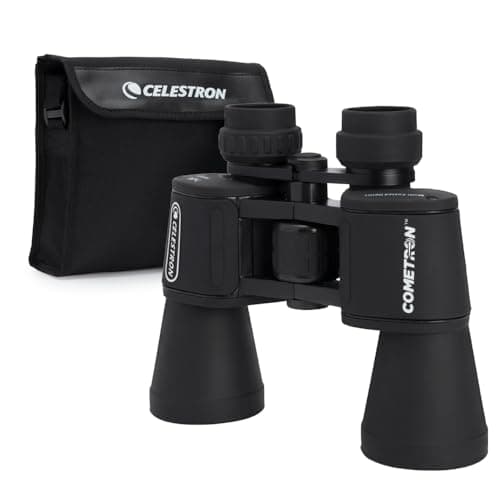 Celestron Cometron 7x50 A 7.1mm exit pupil, a five-second setup, and nothing that can go wrong. | The safest gift for almost anyone | |
| 2 | 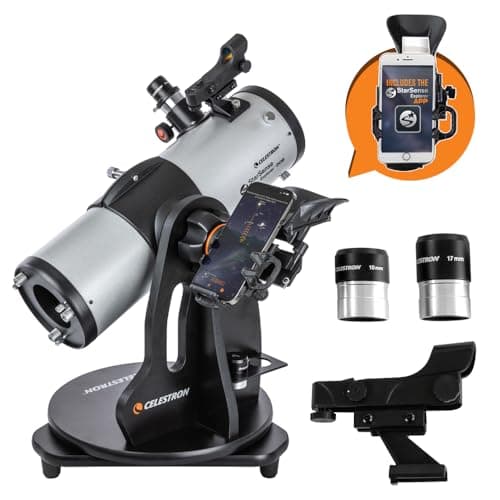 Celestron StarSense Explorer 114mm Tabletop Dobsonian 114mm of parabolic mirror with an app that puts faint targets in the eyepiece. | The kid who is genuinely serious about it | |
| 3 | 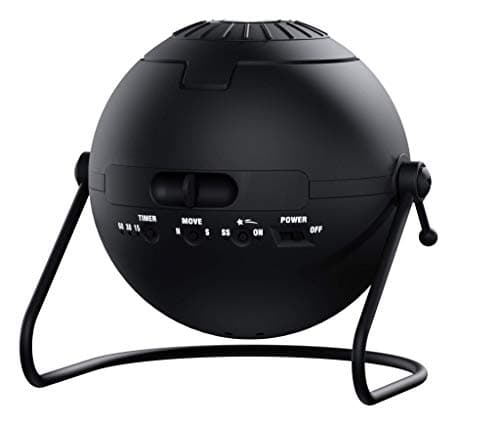 Sega Toys Homestar Flux An optical home planetarium that shows the real sky indoors, every night. | An adult, a teenager, or anyone with no garden | $259.00 on Amazon #ad How we’re funded · price as of October 18, 2026 |
| 4 | 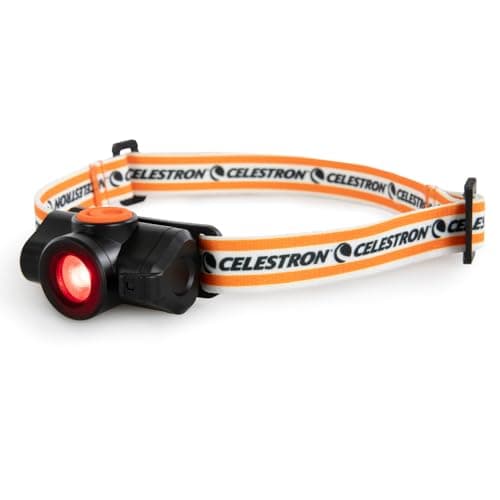 Celestron Night Vision Red Headlamp A 1-lumen red headlamp — the cheapest thing here and the one that changes the most. | The add-on that improves every other gift on this page |
Rows link to the full write-up further down this page. Prices come from the live price layer only; where there is no live figure the button reads “Check price” rather than showing a number we remembered.
The three questions that decide it
- Will anyone go outside in the cold with them? This is the real question behind every telescope purchase. If the honest answer is no, a projector is not a consolation prize — it is the correct gift, and it will be used a hundred times more.
- Do they have somewhere to observe? A lit balcony still shows the Moon and planets, which are bright enough to punch through anything. Faint objects need a dark sky, and no amount of spending substitutes for one.
- Did they ask for something specific? If they named a telescope, buy a telescope. Substituting something technically superior reads as a substitution, and the wanting was part of the gift.
What to avoid, whoever they are
- Anything advertising magnification in the hundreds. A telescope's realistic ceiling is about twice its aperture in millimeters. A 50mm claiming 525x is describing its eyepieces, not its optics.
- Multi-eyepiece accessory kits. Five cheap eyepieces lose to one good one, the colored filters do little in a small telescope, and the included Barlow is usually what pushes the set past the optics' limit.
- A decorative light sold as astronomy. Fine bought knowingly, wrong for someone who asked to learn the constellations.
- A 0.96 inch diagonal. The legacy fitting that blocks every future eyepiece upgrade. Standard is 1.25 inches.
The full version of that argument, with the arithmetic, is on the space gifts not to buy.
Timing, and the mistake of December
Space gifts have a scheduling problem nobody mentions on the box: the gift-giving calendar and the observing calendar do not line up well.
- Midwinter is dark early, which helps — a child can observe at 5pm rather than 10pm, and that is genuinely the best thing about a December telescope.
- Midwinter is also cloudy and cold, so the first clear night may be weeks after the wrapping comes off. Expect a gap, and say so when you give it, or the silence reads as disappointment.
- A summer birthday is the harder case. It may not get properly dark until well past bedtime, which makes a projector the better summer gift and a telescope the better winter one.
- Check the Moon before you plan the first session. A half Moon is the best beginner target there is, and it is worth waiting a few days for rather than opening with a washed-out full one.
How to give it well
The presentation matters more with optics than with most gifts, because the failure mode is a child alone with a box they cannot assemble.
- Assemble it beforehand if you can. An hour with the instructions, in daylight, converts the gift from a project into an instrument.
- Give it with a plan, not just a promise. *We will go out on the first clear night* is worth more than any accessory, and it is the part most often forgotten.
- Include the red torch in the same parcel. It is small, cheap, and it changes what they actually see more than anything else at the price.
- Set the expectation out loud. Tell them the Moon will be extraordinary, Saturn will be small and unmistakable, and the galaxies will be gray. Nobody is ever disappointed by a view they were told to expect.
Setting the expectation with the gift
The single most valuable thing you can add costs nothing: tell them what they will actually see. A 70mm to 114mm telescope shows the Moon in real detail, Jupiter with its moons, Saturn's rings as a distinct oval, and the brighter nebulae as gray patches with structure.
What it will not show is anything resembling the photograph on the box — those are long exposures, and the human eye cannot accumulate light. Managing that before the wrapping comes off is worth more than any upgrade, and it is what what you can actually see exists for.
We have not handled any of these products. Every figure above is from a manufacturer's published page, linked on each product card, and everything derived from it is arithmetic you can repeat. No price appears in this prose — live figures come only from our price feed. Our method is on the methodology page.
Questions people actually ask
- What is the best gift for someone who loves space?
- It depends on the person, not the budget. Under six, a star projector. Six to ten, 7x50 binoculars. Nine and up and serious, aperture. An adult or teenager without a garden, an optical planetarium.
- What is a good space gift for an adult?
- An optical home planetarium or a good pair of binoculars. Adults in this category are usually short of dark skies and free evenings, so something that works indoors on a weeknight gets used far more than a telescope does.
- Is a telescope a good gift?
- Only if somebody in the household will go outside in the cold with it. A telescope needs a willing adult in January — where that person does not exist, a projector or binoculars is the better gift and not a compromise.
- What do you buy someone who already has a telescope?
- A red torch first, then one good mid-range eyepiece. Both are things owners rarely buy themselves and both noticeably improve what they see.
- How much should you spend on a space gift?
- Matching the recipient matters more than the amount. Under $50 buys genuinely good binoculars; $100 to $200 buys a first telescope that gets used; above that you are buying aperture for someone who already knows they want it.
Sources
Read next
Where to go from here
- Astronomy gifts for kids, by age
The whole site re-sorted for someone who knows the child's age and nothing else about telescopes. One pick per band.
- Gifts for the kid who is obsessed with space
The one question that decides which space gift lands, and four picks split across the answer.
- The space gifts not to buy — and what to buy instead
The four ways the kids astronomy aisle disappoints, each with the arithmetic that exposes it and the honest alternative at the same money.
- The best space gifts for kids under $100
Binoculars, telescope, projector or accessory — the cross-category view of one budget, and why the best answer is usually not the telescope.
- What to buy a kid who already has a telescope
A telescope's real problems are dark adaptation, steadiness and knowing where to point it. None of them cost much to fix.
- What you can actually see with a kids' telescope
The honest target-by-target list for 70mm, 76mm and 114mm telescopes, so nobody is disappointed on night one.
- The best star projector for adults
An accurate home planetarium and a colored nebula lamp are not the same purchase. The split explained, with three picks judged on what an adult room actually needs.