Star Projectors
Sega Toys Homestar Flux: the serious one
Over 60,000 real stars, no color, no app, no speaker.
By Scooter M. · published September 1, 2026
I'm not an astronomer and I don't have a lab. I'm someone who's genuinely into this — I read the manuals, compile the published specs, and do the arithmetic the box doesn't do for you. No lab coat. How we pick.
How this is funded. Lens & Lightyear earns a commission when you buy through a link on this page, at no extra cost to you. It does not change which products we pick or what we say about them — every card below carries a real reason to skip it. Prices are pulled live and were last verified October 18, 2026. Full disclosure.
The short answer
It is the best home planetarium you can buy, and it is the wrong present for a lot of children. Over 60,000 cataloged stars on a 290 cm projection is genuinely remarkable. It is also white points on a dark ceiling, with no color, no app and no speaker, at several times the price of a galaxy projector.
The published specification
| Specification | Published figure | What it means |
|---|---|---|
| Stars projected | Over 60,000 | The highest density available in a home unit. This is what makes it look like the sky. |
| Projection diameter | Approximately 290 cm | Nearly three meters across — it fills a bedroom ceiling properly. |
| Projection distance | 140 to 270 cm | Needs to sit at that range from the surface. Plan the shelf before you buy. |
| Light source | 5 W LED | Optical projection through a glass lens, not a laser. |
| Dimensions | 160 x 160 x 150 mm | Roughly the size of a small speaker. |
| Features | Rotation, sleep timer, interchangeable discs | The entire list. Nothing has been left out of this table. |
Figures reported by Space.com and Live Science in their reviews of the unit. Sega Toys does not publish a US-facing specification page we could cite directly, so we are attributing where the numbers came from rather than presenting them as manufacturer data.
Why star count actually matters
It is easy to read 60,000 as a marketing number, so it is worth explaining what it changes.
A constellation is not just its bright stars. What makes Orion recognizable in a real sky is the Belt and the shoulders *plus* the scatter of fainter stars around them that give the pattern context. A projector showing only the bright stars produces a diagram; a projector showing the faint ones too produces something that reads as sky.
That is the difference between 8,000 and 60,000, and it is the difference between a child recognizing a shape on their ceiling and a child recognizing the sky. Whether that is worth several times the price depends entirely on the child.
Quick picks
The Homestar Flux and its alternatives
| # | Product | Best for | Price |
|---|---|---|---|
| 1 | 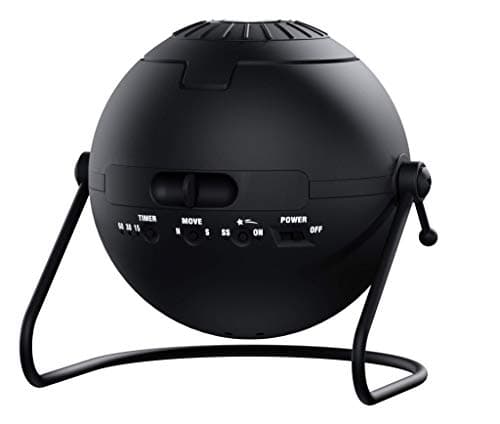 Sega Toys Homestar Flux Over 60,000 cataloged stars, optically projected, 290 cm across. | A child who genuinely wants to learn the sky | $259.00 on Amazon #ad How we’re funded · price as of October 18, 2026 |
| 2 | No image National Geographic Astro Planetarium 8,000 real stars, 61 named constellations, plus a date-and-time setting. | The affordable accurate alternative | |
| 3 | 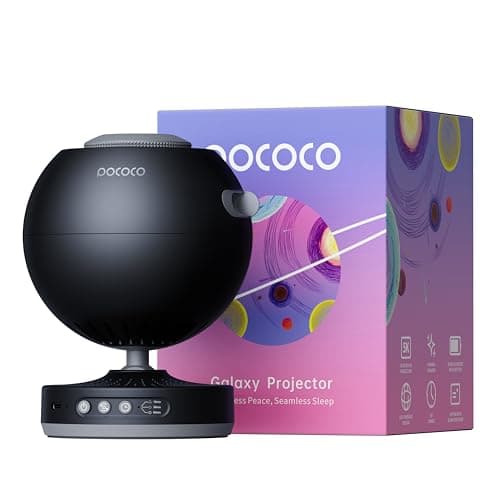 Pococo Galaxy Projector 5K discs, around 40,326 stars, and a disc library that covers both halves. | If you want both accurate and decorative | $104.99 on Amazon #ad How we’re funded · price as of October 18, 2026 |
Rows link to the full write-up further down this page. Prices come from the live price layer only; where there is no live figure the button reads “Check price” rather than showing a number we remembered.
Who this is wrong for
We would rather talk you out of this than have you buy it for the wrong child, so here it is plainly.
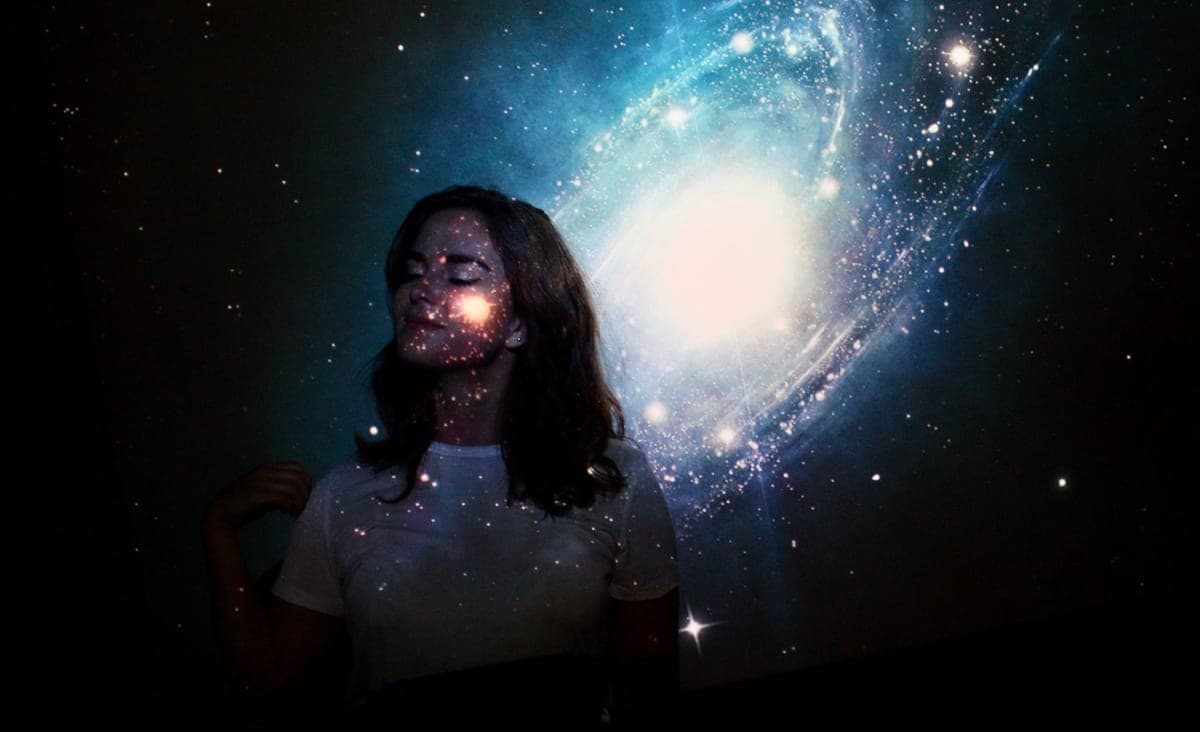
- A child expecting the galaxy videos. The images that sell projectors on social media are swirling purple and green nebulae. This produces white dots. A child expecting the former will be visibly disappointed by the latter, and it will not matter how accurate it is.
- A toddler. They cannot use the accuracy, and a decorative unit at a fraction of the price will delight them more. See projectors for toddlers.
- A room with a very high or very wide ceiling. The throw range is 140 to 270 cm. Outside that, the projection is either too small or out of focus.
- Someone who wanted a speaker, an app or color modes. It has none of those and never will.
Who it is exactly right for
A child of roughly seven and up who has started asking what things are called, who already has or is about to get binoculars or a telescope, and who lives somewhere with more cloudy nights than clear ones.
For that child this is a genuinely useful instrument rather than a novelty. Learning constellations indoors on a Tuesday is what makes finding them outdoors on a Friday possible, and there is no other way to practice that skill when it is raining.
Pair it with binoculars and the combination is better than either alone: the projector teaches the patterns, the binoculars show the real thing.
About the sourcing on this page
One transparency note, because it applies here more than elsewhere on the site. Sega Toys does not publish a US-facing specification page for this product that we could find, so the figures above come from published reviews at Space.com and Live Science rather than from the manufacturer.
We have said so rather than presenting them as manufacturer data, and we have not filled the remaining gaps — weight, exact disc specifications, warranty — with numbers from elsewhere. Where we do not know, we say we do not know. That is the standard set out on our methodology page.
The picks in full
Pick 1
Sega Toys Homestar Flux
A child who genuinely wants to learn the sky
The arithmetic
The number that separates this from every colorful nebula projector is 60,000 — because those are cataloged stars in their real positions, not a decorative pattern. It means a child can find Orion on their ceiling and then find the same Orion out of the window, which is the only thing a projector can do that genuinely helps with a telescope.
The reference optical planetarium for a home, and the reason is the number: over 60,000 stars, in cataloged positions, projected through a real glass lens rather than a plastic diffuser.
The projection is approximately 290 cm across at a throw distance between 140 and 270 cm, driven by a 5 W LED, in a unit measuring 160 x 160 x 150 mm.
What that density buys is recognition. At 8,000 stars a constellation is a rough shape; at 60,000 the ceiling starts to look like the sky, with the faint background stars that make a real constellation identifiable rather than merely present.
Feature list in full: rotation, sleep timer, interchangeable discs. No speaker, no app, no color modes, no voice assistant. Everything it does not do is a deliberate choice.
Skip it if
The child has been shown swirling galaxy videos and is expecting color. This is white points on a dark ceiling — accurate, quiet and restrained — and a child expecting a light show is going to be underwhelmed at a price several times what that light show costs.
| Projection type | Optical disc projection through a glass lens |
|---|---|
| Stars projected | Over 60,000 |
| Projection diameter | Approximately 290 cm |
| Projection distance | 140 to 270 cm |
| Light source | 5 W LED |
| Dimensions | 160 x 160 x 150 mm |
| Features | Rotation, sleep timer, interchangeable discs |
| What the box does not do | It projects white stars on a dark ceiling and nothing else — no color washes, no aurora, no speaker, no app. Children expecting the swirling purple galaxy they have seen on social media are sometimes disappointed by how quiet and accurate it is. It also costs several times what those projectors do. |
Specifications from Space.com — Sega Toys Homestar Flux review (star count, projection figures); Live Science — Sega Toys Homestar Flux review. We have not handled this one — everything above is the published spec sheet plus our own arithmetic on it.
#ad How we’re funded · price as of October 18, 2026
Pick 2
National Geographic Astro Planetarium
The affordable accurate alternative
The arithmetic
8,000 real stars and 61 named constellations, adjustable to a specific date and time — so you can set it to the sky outside tonight and then go and find the same thing. That is the useful trick. Note the manufacturer's own age guidance of 14 and up: this is a mechanism with small parts and fiddly discs, not a nursery night light, whatever the shelf it sits on suggests.
The sensible step down, and for many families the better buy.
8,000 cataloged stars and 61 named constellations across two discs. That is enough for constellations to be clearly recognizable, which is most of the educational value, at a fraction of the flagship price.
It has one feature the Homestar does not: a date-and-time adjustment, so the ceiling can be set to match the sky outside tonight. For teaching a child to find things, that is arguably worth more than star density.
Constraints: 3 m maximum throw, 1.6 x 2.1 m projection at 2 m, three AA batteries supplied but no DC cable, and Bresser's own 14-and-up guidance for handling.
Skip it if
Star density is the point. 8,000 against over 60,000 is a very large difference on a ceiling, and if the reason you are buying is to make a room genuinely look like the night sky, this will not do it.
| Stars projected | Over 8,000 |
|---|---|
| Constellations | 61 named |
| Discs | 2 projection discs included |
| Projection area | 1.6 x 2.1 m at 2 m distance |
| Maximum projection distance | 3 m |
| Motion | Dual motors, 6 speeds |
| Timer | Auto shut-off at 30, 60 or 120 minutes |
| Power | 3 x AA (supplied) or 5 V DC cable (not supplied) |
| Manufacturer age guidance | 14 and up |
| Included | 2 projection discs, 3 AA batteries, instruction manual |
| What the box does not do | The 3 m maximum throw means it needs a reasonably close ceiling. The DC cable is not supplied, so on batteries alone it is an occasional-use device. No app, no speaker, no color. |
Specifications from Bresser — National Geographic Astro Planetarium; Space.com — National Geographic Astro Planetarium review. We have not handled this one — everything above is the published spec sheet plus our own arithmetic on it.
Pick 3
Pococo Galaxy Projector
If you want both accurate and decorative
The arithmetic
A middle path between an accurate planetarium and a decorative light. The disc system means you can run a real star field one night and a nebula the next, and the focus wheel is large enough for a child to work themselves — which matters more than it sounds, because a projector nobody can focus gets switched off. No speaker and no app is a feature in a bedroom, not a gap.
The compromise pick, and a genuinely reasonable one for a family that is not sure which half of the category they want.
Around 40,326 stars on the star disc — between the Homestar and the National Geographic — through a 2 megapixel lens with 5K discs, covering about 12 square meters.
The disc library is the point: real star fields, nebulae, planets, constellations, aurora. One unit, two entirely different products, depending on which disc is in it.
1.63 lb, USB-C with an internal battery, a large focus wheel, and no speaker or app. In a child's bedroom the absence of an app is a feature rather than a gap.
Skip it if
You want a single purchase. Two discs are included and the interesting ones are sold separately, so the full experience is an accumulating cost.
| Projection type | Optical disc projection, LED (no laser) |
|---|---|
| Disc resolution | 5K discs through a 2 megapixel lens |
| Stars projected | Around 40,326 on the star disc |
| Projection area | Approximately 12 square meters |
| Dimensions | 157 x 120 x 120 mm |
| Weight | 1.63 lb |
| Power | 5 V USB-C, internal battery, about 1.5 W |
| Controls | Focus wheel, on-body rotation, sleep timer, 60 degree tilt |
| Discs | Two included; further sets sold separately |
| What the box does not do | No speaker, no app control, no aurora effects. Extra discs are an ongoing cost. The battery is convenient but it is one more thing to charge. |
Specifications from Space.com — Pococo Galaxy star projector review; Live Science — Pococo Galaxy star projector review. We have not handled this one — everything above is the published spec sheet plus our own arithmetic on it.
#ad How we’re funded · price as of October 18, 2026
Questions people actually ask
- Is the Sega Homestar Flux worth it?
- For a child who genuinely wants to learn the constellations, yes — over 60,000 cataloged stars is a step change over anything cheaper. For a child who wants a colorful bedroom, no; a decorative projector costs a fraction and does that job better.
- How many stars does the Homestar Flux project?
- Over 60,000, in cataloged positions, across a projection roughly 290 cm in diameter at a throw distance of 140 to 270 cm.
- Does the Homestar Flux show real constellations?
- Yes. It is an optical planetarium projecting stars in their real positions, so constellations are recognizable and transfer directly to the sky outside.
- What is the best planetarium projector for kids?
- The Homestar Flux if star density and accuracy are the priority and budget allows. The National Geographic Astro Planetarium is the affordable accurate alternative, with the bonus of a date-and-time setting.
- Does the Homestar Flux have a speaker or an app?
- No. It has rotation, a sleep timer and interchangeable discs, and nothing else. That restraint is deliberate and it is part of why it costs what it does.
Sources
Read next
Where to go from here
- Pococo Galaxy Projector review
Swappable optical discs, a focus wheel small hands can use, and deliberately no app. The middle option between an accurate planetarium and a light show.
- Accurate or decorative? The star projector split nobody explains
The single distinction that decides whether a star projector supports a child's interest in astronomy or is simply a very nice bedroom light.
- Star projector or telescope? A clear answer either way
The two gifts overlap in price and are completely different in what they do. Which one is right for a given child, with a winner named for each scenario.
- Smart star projectors: what the app actually adds
App control, voice assistants and scene modes are what the money buys in the decorative half of the category. What that is genuinely worth in a child's room.
- The best binoculars for stargazing with kids
The exit pupil calculation that decides which binoculars suit a child, and what a 7x50 actually shows on a first clear night.
- Gifts for the kid who is obsessed with space
The one question that decides which space gift lands, and four picks split across the answer.
- Our methodology
What we compile, what arithmetic we run, and what we do not do.