Star Projectors
Pococo Galaxy Projector review
The middle path: sharper than a nebula light, simpler than a planetarium.

By Scooter M. · published September 6, 2026
I'm not an astronomer and I don't have a lab. I'm someone who's genuinely into this — I read the manuals, compile the published specs, and do the arithmetic the box doesn't do for you. No lab coat. How we pick.
How this is funded. Lens & Lightyear earns a commission when you buy through a link on this page, at no extra cost to you. It does not change which products we pick or what we say about them — every card below carries a real reason to skip it. Prices are pulled live and were last verified October 21, 2026. Full disclosure.
The short answer
A good middle choice. The swappable discs mean it can be a star field one night and a nebula the next, the focus wheel is usable by a child, and leaving out the app and speaker is the right call for a bedroom. It is not a scientifically accurate planetarium, and extra discs are an ongoing cost.
Star projectors split into two genuinely different products that share a shelf: accurate planetariums that show the real sky, and decorative light shows that do not. The interesting thing about this one is that it sits deliberately between them.
Where it sits in the category
| Decorative light | Pococo Galaxy | Home planetarium | |
|---|---|---|---|
| What it shows | Nebula washes, moving lasers | Real star fields and scenic discs | The real sky, correctly arranged |
| Teaches constellations | No | Partly | Yes |
| Changeable image | Color modes | Yes — swappable discs | Limited |
| Child can operate it | Yes | Yes — large focus wheel | Fiddly |
| App or speaker | Often both | Neither, by design | Neither |
| Ongoing cost | None | Extra discs | None |
| Price bracket | Lowest | Middle | Highest |
Bold marks the advantage in each row. No column wins outright — these are three different products for three different children.
Quick picks
The Pococo and the two things it sits between
| # | Product | Best for | Price |
|---|---|---|---|
| 1 | 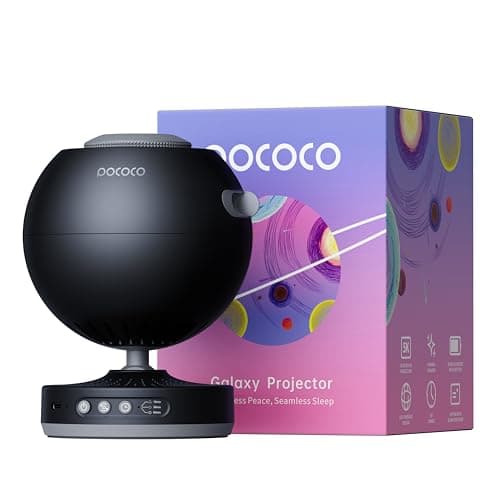 Pococo Galaxy Projector Swappable 5K discs, a focus wheel a child can turn, and no app to lose. | A child who wants both real stars and something pretty | $104.99 on Amazon #ad How we’re funded · price as of October 21, 2026 |
| 2 | 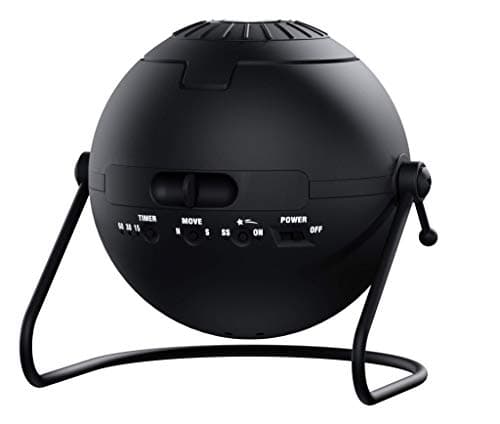 Sega Toys Homestar Flux An optical home planetarium built to show the real sky rather than a pretty one. | When astronomical accuracy is the point | $259.00 on Amazon #ad How we’re funded · price as of October 21, 2026 |
| 3 | 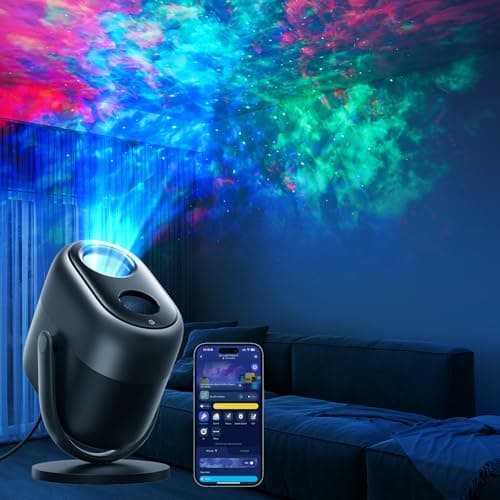 Govee Star Light Projector with Nebula Effect A nebula-and-stars light show for a bedroom, with no pretence of being a sky. | The decorative end, at a fraction of the price | $99.99 on Amazon #ad How we’re funded · price as of October 21, 2026 |
Rows link to the full write-up further down this page. Prices come from the live price layer only; where there is no live figure the button reads “Check price” rather than showing a number we remembered.
What the discs actually change
Most projectors show one thing. This one shows whatever disc is loaded, and that changes the ownership experience more than any specification does.
- Two discs are included, and further sets are sold separately. Budget for at least one more set if the child takes to it.
- Swapping is the ritual. Children who would ignore a fixed projection after a fortnight keep coming back to one where tonight's sky is a choice they make.
- 5K discs through a 2 megapixel lens is the published figure. In plain terms: the image is sharp enough that individual stars read as points rather than as a blur, which is exactly where cheap projectors fall down.
- Focus is per-disc. Different discs sit at slightly different optical distances, so the focus wheel gets used every time — which is why it being child-operable matters.
The three practical things nobody mentions
- Ceiling distance decides everything. The published projection area is around 12 square meters, and that figure assumes a sensible throw. A high ceiling spreads the same light thinner and the stars dim; a low one gives a small, bright, sharp sky. Try it on the actual ceiling before deciding where it lives.
- Dark means dark. A streetlight through thin curtains will wash out any projector in this category. This is the single most common reason a projector disappoints, and it costs nothing to fix.
- The battery is convenience, not independence. At about 1.5 W from 5 V USB-C it will run a bedtime session, but it is one more thing to charge. For nightly use, plan on leaving it plugged in.
Who this is for
| Situation | Verdict |
|---|---|
| A child who loves space and also loves their bedroom looking good | This one. The disc library serves both halves of that, which nothing else here does. |
| You want them to learn the actual constellations | A home planetarium is the better instrument, or an accurate model. |
| Toddler or nursery use | See projectors for toddlers — different requirements entirely, mostly about durability and no small parts. |
| Tight budget | The decorative end does the atmosphere job for far less. See under $50. |
| You want app control and color | That is the smart projector category, and this deliberately is not it. |
A note on where these figures come from
This is the one product on this page whose specifications we did not take from a manufacturer's own engineering page. Pococo publishes marketing copy rather than a full spec sheet, so the figures above come from the published hands-on reviews at Space.com and Live Science, both linked below.
We are flagging that because provenance matters: those are third-party measurements and descriptions rather than the manufacturer's own stated specifications, which is a different kind of source from the Celestron and Bresser pages we cite elsewhere on this site. We have not handled this projector ourselves. Our full method, including what we refuse to publish, is on the methodology page.
The picks in full
Pick 1
Pococo Galaxy Projector
A child who wants both real stars and something pretty
The arithmetic
A middle path between an accurate planetarium and a decorative light. The disc system means you can run a real star field one night and a nebula the next, and the focus wheel is large enough for a child to work themselves — which matters more than it sounds, because a projector nobody can focus gets switched off. No speaker and no app is a feature in a bedroom, not a gap.
The disc system is the whole design. Instead of one fixed projection, you drop in a different optical disc and get a different image — a real star field one night, a nebula the next. Published figures put the star disc at around 40,326 stars, projected through a 2 megapixel lens from 5K discs onto roughly 12 square meters.
The focus wheel matters more than the resolution does. It is large enough for a child to operate themselves, and a projector nobody can focus is a projector that gets switched off after a week. That is a design decision aimed at the actual user, and it is rarer in this category than it should be.
The absences are deliberate and, in a bedroom, they are features: no speaker, no app, no color-cycling light show. It is 1.63 lb, runs from 5 V USB-C with an internal battery at about 1.5 W, and has a sleep timer and a 60 degree tilt.
The ongoing cost is real and worth stating before you buy: two discs are included, and further sets are sold separately. A child who loves it will want more discs, and that is the business model.
Skip it if
You want a scientifically accurate sky specifically. The disc library mixes real star fields with nebula and scenic images, and the star disc is a rendering rather than a dated, positioned sky you can match to tonight's window.
| Projection type | Optical disc projection, LED (no laser) |
|---|---|
| Disc resolution | 5K discs through a 2 megapixel lens |
| Stars projected | Around 40,326 on the star disc |
| Projection area | Approximately 12 square meters |
| Dimensions | 157 x 120 x 120 mm |
| Weight | 1.63 lb |
| Power | 5 V USB-C, internal battery, about 1.5 W |
| Controls | Focus wheel, on-body rotation, sleep timer, 60 degree tilt |
| Discs | Two included; further sets sold separately |
| What the box does not do | No speaker, no app control, no aurora effects. Extra discs are an ongoing cost. The battery is convenient but it is one more thing to charge. |
Specifications from Space.com — Pococo Galaxy star projector review; Live Science — Pococo Galaxy star projector review. We have not handled this one — everything above is the published spec sheet plus our own arithmetic on it.
#ad How we’re funded · price as of October 21, 2026
Pick 2
Sega Toys Homestar Flux
When astronomical accuracy is the point
The arithmetic
The number that separates this from every colorful nebula projector is 60,000 — because those are cataloged stars in their real positions, not a decorative pattern. It means a child can find Orion on their ceiling and then find the same Orion out of the window, which is the only thing a projector can do that genuinely helps with a telescope.
If what you actually want is a planetarium — the real sky, correctly arranged — this is the machine, and the Pococo is not pretending to compete with it.
The trade runs the other way too: the Homestar does one thing extremely well and does not offer a nebula disc to switch to when a seven-year-old is bored of constellations.
Full review, and the accuracy question in general is on accurate vs decorative.
Skip it if
The child is small and will be operating it alone, or the budget is tight. This is the most serious projector on the site and it is priced accordingly.
| Projection type | Optical disc projection through a glass lens |
|---|---|
| Stars projected | Over 60,000 |
| Projection diameter | Approximately 290 cm |
| Projection distance | 140 to 270 cm |
| Light source | 5 W LED |
| Dimensions | 160 x 160 x 150 mm |
| Features | Rotation, sleep timer, interchangeable discs |
| What the box does not do | It projects white stars on a dark ceiling and nothing else — no color washes, no aurora, no speaker, no app. Children expecting the swirling purple galaxy they have seen on social media are sometimes disappointed by how quiet and accurate it is. It also costs several times what those projectors do. |
Specifications from Space.com — Sega Toys Homestar Flux review (star count, projection figures); Live Science — Sega Toys Homestar Flux review. We have not handled this one — everything above is the published spec sheet plus our own arithmetic on it.
#ad How we’re funded · price as of October 21, 2026
Pick 3
Govee Star Light Projector with Nebula Effect
The decorative end, at a fraction of the price
The arithmetic
25 dB is the specification that matters in a child's bedroom and the one nobody checks — roughly the level of a quiet library, which is quiet enough to fall asleep next to. 540 sq ft of coverage will fill an ordinary bedroom ceiling with room to spare, and is in fact 79 percent more area than the far more expensive Galaxy 2 Pro covers.
The honest bottom of the category, and there is nothing wrong with buying it knowingly. Laser-and-nebula projectors produce a genuinely lovely bedroom effect for a small fraction of the Pococo's price.
What they do not do is teach a constellation. If the gift is atmosphere, buy this and save the difference; if the gift is astronomy, it is the wrong product at any price.
We compare the smart and app-driven end of the category on smart star projectors and Govee.
Skip it if
You want the child to learn anything about the actual night sky. This is mood lighting done well, and it is not an astronomy product.
| Model | H6095 |
|---|---|
| Nebula rendering | 7 independent light zones, 7 RGBW lamp beads with 7 independent IC chips |
| Coverage area | 540 square feet |
| Noise level | Less than 25 dB |
| Scene modes | 50+ |
| White noise options | 18 |
| Control | Function button, Govee Home app, voice, Matter |
| Connectivity | 2.4GHz Wi-Fi and Bluetooth |
| Voice assistants | Alexa and Google Assistant |
| Power | 10 W; 5 V DC 3 A input, 100-240 V adapter |
| Dimensions | 5.51 x 6.18 x 8.94" |
| Weight | 1.6 kg |
| What the box does not do | Decorative only: the star field is a pattern, not a sky. No optical discs, so what you see on night one is what you see on night two hundred. Needs the app for most of its features. |
Specifications from Govee — Star Light Projector with Nebula Effect. We have not handled this one — everything above is the published spec sheet plus our own arithmetic on it.
#ad How we’re funded · price as of October 21, 2026
Questions people actually ask
- Is the Pococo Galaxy Projector worth it?
- For a child who wants both a real star field and something attractive on the ceiling, yes. The swappable discs give it more staying power than a fixed projection, and the child-operable focus wheel matters more than the resolution figures.
- Is the Pococo Galaxy Projector astronomically accurate?
- Not in the way a home planetarium is. The star disc shows a real star field, but the library mixes those with nebula and scenic images, and it is not a dated, positioned sky you can match to what is outside the window tonight.
- Does the Pococo need an app?
- No, and that is deliberate. There is no app and no speaker — controls are a focus wheel, on-body rotation, a sleep timer and a 60 degree tilt. In a bedroom that is a feature rather than a gap.
- How many discs come with the Pococo Galaxy Projector?
- Two are included. Further disc sets are sold separately, which is a genuine ongoing cost worth factoring in if the child takes to it.
- What size room does a star projector need?
- The published projection area is around 12 square meters at a sensible throw. A lower ceiling gives a smaller, brighter, sharper sky; a high ceiling spreads the same light thinner. Full darkness matters more than room size.
Sources
Read next
Where to go from here
- Accurate or decorative? The star projector split nobody explains
The single distinction that decides whether a star projector supports a child's interest in astronomy or is simply a very nice bedroom light.
- Sega Toys Homestar Flux: the serious one
The flagship optical planetarium. What over 60,000 cataloged stars looks like on a ceiling, and why some children find it disappointing.
- The best star projector under $50
The sub-$50 shelf is where most of this category lives and where the specifications get least reliable. What to check and what to ignore.
- Smart star projectors: what the app actually adds
App control, voice assistants and scene modes are what the money buys in the decorative half of the category. What that is genuinely worth in a child's room.
- The best star projector for a toddler's room
For a very young child the useful specifications are noise level, dimming and cable placement. Star count barely matters. What to actually look for.
- Telescope, binoculars or star projector?
Three completely different gifts sold to the same buyer. Which one fits your child, your sky and your household, with a winner named for each.