Gifts
Gifts for the kid who is obsessed with space
Two kinds of obsession, and they want opposite presents.

By Scooter M. · published September 1, 2026
I'm not an astronomer and I don't have a lab. I'm someone who's genuinely into this — I read the manuals, compile the published specs, and do the arithmetic the box doesn't do for you. No lab coat. How we pick.
How this is funded. Lens & Lightyear earns a commission when you buy through a link on this page, at no extra cost to you. It does not change which products we pick or what we say about them — every card below carries a real reason to skip it. Prices are pulled live and were last verified October 18, 2026. Full disclosure.
The short answer
Ask whether they love space or love the look of space. Genuine curiosity — how far, how big, what does it look like — wants optics that show real things. Aesthetic love wants a projector, a poster, a book. Both obsessions are real; they want opposite presents, and buying the wrong one is how a good gift lands badly.
The two obsessions
This distinction is the whole page, and it is worth being specific about how to spot each one.
| Signal | Observational obsession | Aesthetic obsession |
|---|---|---|
| What they ask | "How far away is Saturn?" "Can we see it?" | "Can I have that poster?" "Look at this picture" |
| What they collect | Facts, distances, numbers of moons | Images, posters, room decoration |
| What they watch | Documentaries, launch livestreams | Nebula videos, space aesthetic content |
| What lands | Real optics. Binoculars, a telescope | A projector, a book, a poster, a model |
| What disappoints | Anything decorative that shows nothing real | A small gray Moon that looks nothing like the photographs |
Plenty of children are both, in which case an optical planetarium is the gift that satisfies each half — it makes a room spectacular and its stars are genuinely real.
Quick picks
Gifts for a space-obsessed kid
| # | Product | Best for | Price |
|---|---|---|---|
| 1 | 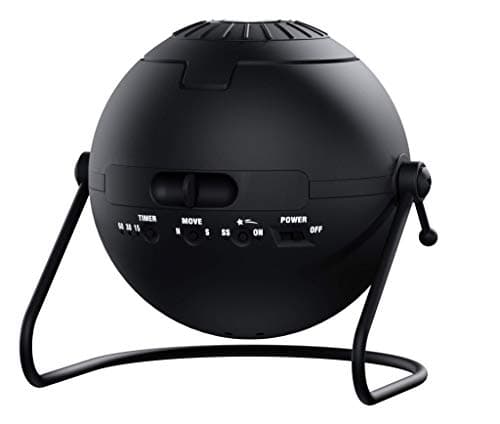 Sega Toys Homestar Flux Over 60,000 cataloged stars, optically projected 290 cm across. | The child who loves how space looks — and wants it real | $259.00 on Amazon #ad How we’re funded · price as of October 18, 2026 |
| 2 | 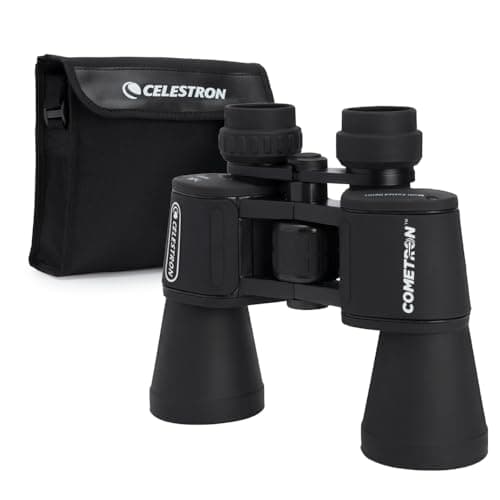 Celestron Cometron 7x50 Real objects, real light, on the first clear night, with no setup at all. | The child who wants to actually see things | |
| 3 | 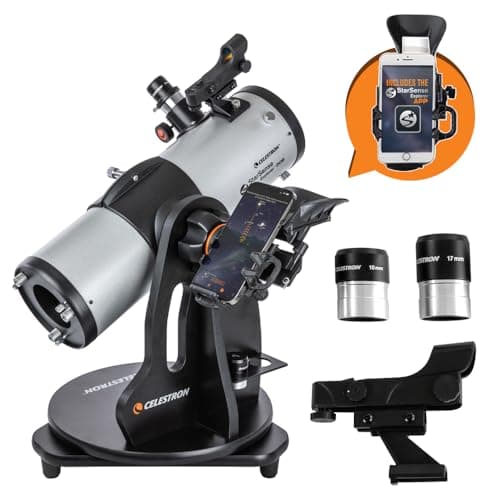 Celestron StarSense Explorer 114mm Tabletop Dobsonian 114mm parabolic mirror, 12.8 limiting magnitude, and phone-guided finding. | When the obsession has lasted a year | |
| 4 | 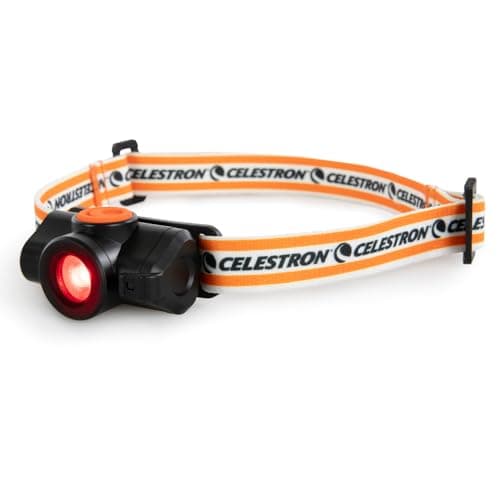 Celestron Night Vision Red Headlamp A 1-lumen red low beam on an adjustable headband, so both hands stay on the telescope. | The small extra that shows you understand the hobby |
Rows link to the full write-up further down this page. Prices come from the live price layer only; where there is no live figure the button reads “Check price” rather than showing a number we remembered.
The trap this page exists to prevent
A child who loves nebula photographs is given a telescope. They point it at Jupiter, see a small bright disc, and quietly conclude that real space is worse than the pictures. That conclusion is very hard to reverse, and the telescope goes in a cupboard.
The reverse also happens. A child with genuine curiosity is given a color-changing galaxy light because it looks like space. Within a day they have worked out that the stars are not real, and the gift becomes a lamp.
Neither failure is about the quality of the product. Both are about matching the gift to which obsession is actually in front of you.
What we will not recommend
- Anything that claims 525x magnification. A telescope's honest ceiling is roughly twice its aperture in millimeters. The full arithmetic is on toy brands versus real optics.
- Character-branded telescopes. Licensed names over plastic optics. A real 76mm tabletop reflector often costs about the same and shows vastly more.
- Anything we have not been able to find published specifications for. If a manufacturer will not say what the aperture is, we are not going to guess on their behalf.
- Star naming certificates. They are not registered with any astronomical body and the name has no standing anywhere. A child who is genuinely into astronomy will find this out, and finding it out is worse than not receiving one.
Presents that cost almost nothing and land well
- A free planetarium app. Point a phone at the sky and it labels everything. It is the single biggest jump in capability available and it is free.
- A red torch. Preserves dark adaptation, and reads as a real astronomy item to a child who is into this.
- A spiral-bound star atlas. Lies flat on a garden table in the dark, with one hand free for the focuser. Books that snap shut stay indoors.
- A blanket and a flask. Being warm and comfortable is most of what determines how long a child stays outside, and nobody ever gives it as a present.
- A trip somewhere dark. Half an hour's drive away from streetlights transforms what a child can see more than any equipment purchase.
The stargazing night kit covers the rest of the cheap things that matter more than the optics do.
The picks in full
Pick 1
Sega Toys Homestar Flux
The child who loves how space looks — and wants it real
The arithmetic
The number that separates this from every colorful nebula projector is 60,000 — because those are cataloged stars in their real positions, not a decorative pattern. It means a child can find Orion on their ceiling and then find the same Orion out of the window, which is the only thing a projector can do that genuinely helps with a telescope.
The gift that satisfies both kinds of obsession at once, which is rare enough to be worth the price.
It makes a bedroom genuinely spectacular, which is what the aesthetic half of the obsession wants. And the stars are real — over 60,000 cataloged positions, projected optically through a glass lens, across roughly 290 cm at a throw of 140 to 270 cm.
That density is what makes it work as astronomy. A constellation is recognizable not just from its bright stars but from the faint scatter around them, and 60,000 stars is enough to produce that.
No speaker, no app, no color modes. Rotation, a sleep timer, interchangeable discs, a 5 W LED, in a 160 x 160 x 150 mm box. Everything it does not do is a choice.
Skip it if
They have been shown swirling purple galaxy videos. This projects white points on a dark ceiling, because that is what the sky looks like, and a child expecting a color show will be disappointed at several times the price of one.
| Projection type | Optical disc projection through a glass lens |
|---|---|
| Stars projected | Over 60,000 |
| Projection diameter | Approximately 290 cm |
| Projection distance | 140 to 270 cm |
| Light source | 5 W LED |
| Dimensions | 160 x 160 x 150 mm |
| Features | Rotation, sleep timer, interchangeable discs |
| What the box does not do | It projects white stars on a dark ceiling and nothing else — no color washes, no aurora, no speaker, no app. Children expecting the swirling purple galaxy they have seen on social media are sometimes disappointed by how quiet and accurate it is. It also costs several times what those projectors do. |
Specifications from Space.com — Sega Toys Homestar Flux review (star count, projection figures); Live Science — Sega Toys Homestar Flux review. We have not handled this one — everything above is the published spec sheet plus our own arithmetic on it.
#ad How we’re funded · price as of October 18, 2026
Pick 2
Celestron Cometron 7x50
The child who wants to actually see things
The arithmetic
Exit pupil is objective divided by magnification: 50 / 7 = 7.1mm, which matches Celestron's published figure. That is the single most useful number here. A fully dark-adapted young pupil opens to around 7mm, so a child uses nearly all of that 7.1mm cone and the view is as bright as the optics can make it. An adult over about forty typically dilates to 5mm or less and simply cannot use the extra — this is one of the rare cases where a child gets more out of the hardware than the grown-up does.
The pick for genuine curiosity — the child who asks how far away things are and wants to know what a planet actually looks like.
Binoculars deliver on that immediately. Point them at Jupiter and there are four moons in a line beside it, moving night to night. Point them at the Moon and there are craters and mountain shadows. Point them at the Pleiades and the field fills with blue-white stars.
The 7.1mm exit pupil matches a dark-adapted young eye, so a child sees this brighter than the adult beside them does. The 6.6 degree field makes finding things trivial.
27.3 oz, tripod adaptable, water resistant. Lie on a blanket and the weight stops mattering.
Skip it if
The obsession is aesthetic rather than observational. A child who loves nebula photographs will find a gray smudge underwhelming, however genuine it is.
| Magnification | 7x |
|---|---|
| Objective lens | 50mm (1.97") |
| Prism glass | BK7 porro |
| Lens coatings | Multi-coated |
| Angular field of view | 6.6 degrees |
| Linear field at 1000 yds | 344 ft (105 m) |
| Exit pupil | 7.1mm (.28") |
| Eye relief | 13mm (.51") |
| Close focus | 26.2 ft (8 m) |
| Weight | 27.3 oz (774 g) |
| Tripod adaptable | Yes |
| Environmental | Water resistant |
| What the box does not do | 27.3 oz is heavy for small arms held up at the sky — plan on leaning against a wall or lying on a blanket, or add the tripod adapter. BK7 prisms are the cheaper glass and show slight softening at the edge of the field. Water resistant is not waterproof. |
Specifications from Celestron — Cometron 7x50mm specifications. We have not handled this one — everything above is the published spec sheet plus our own arithmetic on it.
Pick 3
Celestron StarSense Explorer 114mm Tabletop Dobsonian
When the obsession has lasted a year
The arithmetic
A parabolic mirror rather than the spherical one in cheaper reflectors, which is what keeps a fast f/4 sharp at the edges. 114mm gathers roughly 2.7 times the light of a 70mm refractor, and the published limiting magnitude of 12.8 is the deepest on this site. The supplied eyepieces only reach 45x against a 269x ceiling, so the box gives you wide, bright, easy views and leaves the high-power ones to buy later.
The gift for an obsession that has already proved itself, and the point at which a child stops being a beginner.
114mm gathers roughly 2.7 times the light of a 70mm refractor. Celestron publishes a limiting stellar magnitude of 12.8, which puts hundreds of clusters, nebulae and galaxies genuinely within reach on a dark night.
The phone guidance changes what the evening looks like. Instead of spending forty minutes finding two objects, a child works through twenty. For someone already obsessed, that acceleration is exactly the right gift.
The supplied 17mm and 10mm eyepieces give 26x and 45x against a 269x ceiling. Wide and bright out of the box; buy one short eyepiece later for planets.
Skip it if
This is a first purchase for a young child. It is the most demanding thing here — 12.6 lbs, no tripod, and a real surface requirement — and it is wasted on an interest that has not yet been tested by a cold February.
| Optical design | Newtonian reflector, parabolic primary mirror |
|---|---|
| Aperture | 114mm (4.48") |
| Focal length | 450mm (17.71") |
| Focal ratio | f/4 |
| Eyepieces supplied | 17mm (26x) and 10mm (45x) |
| Finderscope | StarPointer red dot |
| Mount | Alt-azimuth tabletop Dobsonian base |
| Highest useful magnification | 269x |
| Limiting stellar magnitude | 12.8 |
| Total kit weight | 12.6 lbs (5.71 kg) |
| What the box does not do | No tripod — it is a tabletop instrument and needs a solid surface at the right height, which is a real planning problem in a garden. A reflector's mirror can drift out of alignment; expect to learn collimation eventually. |
Specifications from Celestron — StarSense Explorer 114mm Dobsonian specifications. We have not handled this one — everything above is the published spec sheet plus our own arithmetic on it.
Pick 4
Celestron Night Vision Red Headlamp
The small extra that shows you understand the hobby
The arithmetic
The cheapest thing on this site and the one that changes the most. Human eyes take 20 to 30 minutes to dark-adapt, and one glance at a white phone screen resets the clock — which is why so many first nights end with a child seeing almost nothing. Red light preserves that adaptation, and the number that matters here is the low setting: **1 lumen**. Most red lights sold for astronomy are far brighter than the job needs, and a red light that is too bright is only a slower way of destroying dark adaptation. The second number is 100 hours on that low beam, which is more clear nights than most families will use in a year.
The stocking-filler that a child who is genuinely into this will recognize as a real astronomy item, which for an obsessed kid matters more than the function.
The function is real too. Eyes take 20 to 30 minutes to dark-adapt and one white light resets it for everyone present. Red light preserves it, which is the difference between seeing a dozen stars and seeing hundreds.
The 1-lumen low beam is the part worth paying for. Most red lights sold for astronomy are far brighter than they need to be, and a genuinely dim setting is what makes one useful rather than merely red.
Headband and quick setup guide included, two year warranty, item 93581. It weighs 62 g and runs 100 hours on low — but the two AAA cells are not in the box.
Skip it if
It is the whole present. A headlamp on its own is not a gift a child gets excited about, whatever it does for their dark adaptation.
| Item number | 93581 |
|---|---|
| Light source | Red LED |
| Output | 1 lumen on low, 4 lumens on high |
| Modes | Low beam, high beam, blinking, SOS |
| Battery life | 100 hours on low, 25 hours on high |
| Power | 2 x AAA alkaline or lithium, user supplied |
| Beam angle | 45 degree adjustable tilt |
| Weight | 62 g (2.15 oz) |
| Dimensions | 58 x 35 x 30mm (2.28" x 1.42" x 1.18") |
| Included | Headlamp, elastic headband with adjusting clips, quick setup guide |
| Warranty | 2 year |
| What the box does not do | Batteries. Celestron supplies the headband and the quick setup guide but not the 2 AAA cells, so buy them in the same order. There is no continuous dimmer — brightness is two fixed steps rather than a wheel you can creep down — and the blinking and SOS modes are camping features that do nothing for astronomy. Being head-mounted it also points wherever the wearer looks, which takes a little discipline around other observers. |
Specifications from Celestron — Night Vision Red Headlamp. We have not handled this one — everything above is the published spec sheet plus our own arithmetic on it.
Questions people actually ask
- What do you get a kid obsessed with space?
- It depends which obsession it is. Genuine curiosity wants real optics — binoculars or a telescope. Love of space imagery wants an optical planetarium projector, which makes a room spectacular and shows real constellations.
- What are cool gifts for kids who love space?
- An optical planetarium projector with real star positions, a pair of 7x50 astronomy binoculars, a red torch, and a spiral-bound star atlas. The last two cost very little and are what a child already into this will recognize as real.
- Are star naming certificates a good gift?
- No. They are not registered with any astronomical body and the name has no standing anywhere. A child genuinely interested in astronomy will discover that, and discovering it is worse than never receiving one.
- What is the best gift for a kid who wants to be an astronaut?
- Something that shows them real objects rather than pictures of them. Binoculars on a clear night, pointed at Jupiter's moons, does more for that ambition than any amount of merchandise.
Sources
Read next
Where to go from here
- The best gifts for space lovers
Space gifts sorted by recipient rather than budget — the small child, the serious kid, the teenager, the adult who never got one. With the honest downside on each.
- Astronomy gifts for kids, by age
The whole site re-sorted for someone who knows the child's age and nothing else about telescopes. One pick per band.
- What to buy a kid who already has a telescope
A telescope's real problems are dark adaptation, steadiness and knowing where to point it. None of them cost much to fix.
- Accurate or decorative? The star projector split nobody explains
The single distinction that decides whether a star projector supports a child's interest in astronomy or is simply a very nice bedroom light.
- The best binoculars for stargazing with kids
The exit pupil calculation that decides which binoculars suit a child, and what a 7x50 actually shows on a first clear night.
- Sega Toys Homestar Flux: the serious one
The flagship optical planetarium. What over 60,000 cataloged stars looks like on a ceiling, and why some children find it disappointing.
- What you can actually see with a kids' telescope
The honest target-by-target list for 70mm, 76mm and 114mm telescopes, so nobody is disappointed on night one.