Star Projectors
The best star projector for a bedroom
A bedroom is a specific room with specific constraints. Most projector guides ignore all of them.
By Scooter M. · published September 13, 2026
I'm not an astronomer and I don't have a lab. I'm someone who's genuinely into this — I read the manuals, compile the published specs, and do the arithmetic the box doesn't do for you. No lab coat. How we pick.
How this is funded. Lens & Lightyear earns a commission when you buy through a link on this page, at no extra cost to you. It does not change which products we pick or what we say about them — every card below carries a real reason to skip it. Prices are pulled live and were last verified October 18, 2026. Full disclosure.
The short answer
Match the projector to the room before the spec sheet. A bedroom needs a short throw for a normal ceiling, genuine darkness at bedtime, a sleep timer so nobody gets up to switch it off, and controls a child can work alone. Image quality decides very little by comparison.
Most star projector guides rank on stars projected and lens resolution. In an actual bedroom those come fourth. The projector that gets used every night is the one that fits the ceiling, survives bedtime, and switches itself off.
The four things a bedroom actually demands
- Throw distance against your ceiling. Published projection areas assume a specific distance. A high ceiling spreads the same light thinner and the stars dim; a low one gives a small, bright, sharp sky. Measure before you buy — this single variable decides more than the optics do.
- Real darkness. A streetlight through thin curtains washes out every projector in this category. This is the most common reason a projector disappoints, and it costs nothing to fix with a blackout blind.
- A sleep timer. Without one an adult has to go back in and switch it off, which is the fastest route to the thing never being used. Auto shut-off is not a luxury in a bedroom, it is the feature.
- Controls a child can use. Focus wheels, not app menus. A projector that needs a parent's phone gets used when the parent is available, which is not most nights.
Notice what is not on that list: the number of stars, the lens megapixels, and whether it does aurora effects. Those differentiate products on a listing page and almost nothing in a real room.
Accurate or decorative — decide before you shop
Star projectors split into two genuinely different products sharing one shelf and one search term, and buying the wrong one is the category's defining mistake.
| Decorative (nebula / laser) | Accurate (optical planetarium) | |
|---|---|---|
| What it shows | Drifting color, moving points | Real star positions |
| Teaches constellations | No | Yes |
| Fills a whole ceiling | Usually yes | A defined disc |
| Works in a bright-ish room | Better | Needs real darkness |
| Child can run it alone | Usually | Varies — discs can be fiddly |
| Price bracket | Lowest | Highest |
| Bedroom verdict | Great ambience, no learning | Genuine astronomy, at a price |
Both are legitimate purchases. The failure is buying the left column for a child who asked to learn the sky, which no amount of money in that column fixes.
Quick picks
Star projectors for a bedroom
| # | Product | Best for | Price |
|---|---|---|---|
| 1 | 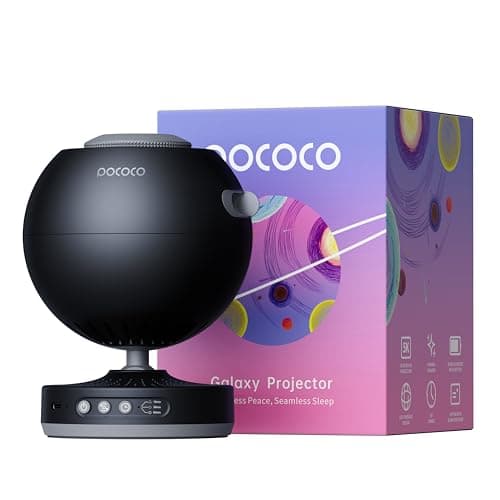 Pococo Galaxy Projector Swappable discs and a focus wheel small hands can actually turn. | A bedroom where the child operates it themselves | $104.99 on Amazon #ad How we’re funded · price as of October 18, 2026 |
| 2 | 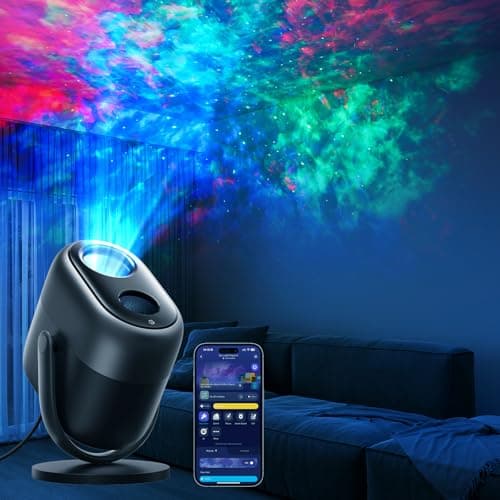 Govee Star Light Projector with Nebula Effect A 7-zone nebula effect that fills a bedroom ceiling for a fraction of a planetarium. | Atmosphere at the lowest price, bought knowingly | |
| 3 | 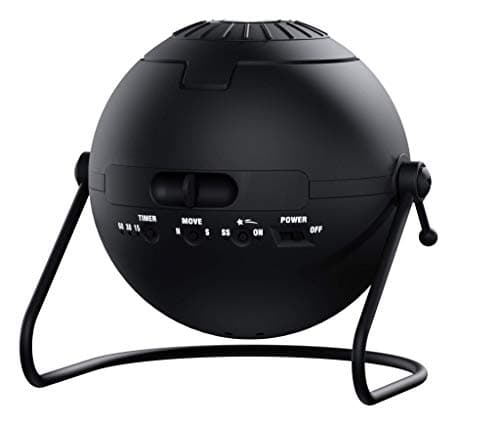 Sega Toys Homestar Flux An optical home planetarium built to show the actual sky rather than a pretty one. | When the bedroom sky should be the real one | $259.00 on Amazon #ad How we’re funded · price as of October 18, 2026 |
Rows link to the full write-up further down this page. Prices come from the live price layer only; where there is no live figure the button reads “Check price” rather than showing a number we remembered.
The trick that makes any bedroom projector educational
Run the star disc, learn one shape on the ceiling, then go outside on the next clear night and find that same shape for real. That single habit is the difference between decoration and the start of an interest.
It works with an accurate projector directly, and with a decorative one if you pair it with a free planetarium app for the actual sky — see stargazing apps for kids. The projector supplies the enthusiasm; the window supplies the astronomy.
Placement, and what fails first
Where a projector sits decides more about the result than its specification does, and it is the part nobody plans before the box arrives.
- Off-center beats center. A projector directly under the middle of the ceiling throws its brightest, most distorted patch straight overhead. Set it to one side and angle it across, and the sky looks deeper and more even.
- Away from the bed, not on it. A device that gets knocked off a duvet every night has a short life, and a warm surface blocks the vents on units that have them.
- Cable reach is a real constraint. Battery models get left uncharged; mains models need a socket where you want the projector, not where the projector fits. Check before ordering.
- A shelf or a low chest is the sweet spot — stable, off the floor, out of a sleepy child's path to the door.
As for what fails first: in this category it is almost never the optics. It is the moving parts and the interfaces — rotation motors that develop a whine, disc mechanisms that get gritty from bedroom dust, and micro-USB ports that loosen from nightly plugging. None of that is a reason to avoid a projector; it is a reason to prefer simple controls and to treat the cheapest units as consumables rather than heirlooms.
Room-by-room sanity checks
- Standard ceiling, normal bedroom — any pick here works. Optimize for controls and timer.
- High or vaulted ceiling — favor the brighter decorative projectors; an optical planetarium's disc will spread and dim.
- Shared room, one child asleep — timer and low brightness matter more than anything optical.
- Streetlight outside — fix the curtains first. No projector at any price out-competes ambient light.
- Toddler's room — different requirements entirely, mostly about durability and no small parts. See projectors for toddlers.
We have not handled these projectors. Manufacturer figures are linked on each card; where a specification comes from a published third-party review rather than a maker's spec sheet, we say so on that product's page. Our method is on the methodology page.
Questions people actually ask
- What is the best star projector for a bedroom?
- The one that fits your ceiling and has a sleep timer and child-operable controls. For learning the sky, an accurate optical planetarium; for atmosphere at low cost, a decorative nebula projector bought knowingly.
- How far should a star projector be from the ceiling?
- Close enough that the published projection area lands on your ceiling. A higher ceiling spreads the same light thinner and dims the stars, so measure your room before choosing.
- Do star projectors help kids sleep?
- They can, if the light is warm and dim and a timer switches it off. A bright cool-white projection running for an hour works against sleep rather than for it.
- Are star projectors worth it for a bedroom?
- For under-sixes, in bad weather, or in a home with no view of the sky, genuinely yes — they get used nightly where a telescope gets used occasionally. Choose accurate over decorative if learning the sky is the goal.
- Where should you put a star projector in a bedroom?
- Off to one side on a shelf or low chest, angled across the ceiling rather than straight up. A central position throws its brightest, most distorted patch directly overhead; an angled throw looks deeper and more even, and keeps the unit away from the bed.
- Are star projectors safe to leave on all night?
- Most are designed to be, but a timer is better practice — both for the device and for sleep. Light in the blue and white range suppresses melatonin, so a warm, dim projection that switches itself off suits a bedroom better than a bright one running until morning.
- What usually breaks first on a star projector?
- Rarely the optics. It is the moving parts and the connectors — rotation motors that develop a whine, disc mechanisms that get gritty with dust, and charging ports loosened by nightly plugging.
- Do you need a completely dark room?
- Close to it. Ambient light is the single biggest cause of a disappointing projector, and a blackout blind improves any model in this category more than upgrading the projector would.
Sources
Read next
Where to go from here
- Accurate or decorative? The star projector split nobody explains
The single distinction that decides whether a star projector supports a child's interest in astronomy or is simply a very nice bedroom light.
- The best star projector for a toddler's room
For a very young child the useful specifications are noise level, dimming and cable placement. Star count barely matters. What to actually look for.
- The best star projector under $50
The sub-$50 shelf is where most of this category lives and where the specifications get least reliable. What to check and what to ignore.
- The best galaxy projector
What actually separates a good galaxy projector from a cheap one — coverage, layering and control — plus the honest line about what none of them teach.
- Pococo Galaxy Projector review
Swappable optical discs, a focus wheel small hands can use, and deliberately no app. The middle option between an accurate planetarium and a light show.
- Stargazing apps for kids, used properly
A planetarium app closes the biggest skill gap in stargazing and wrecks dark adaptation doing it. How to get one without the other.
- The best star projector for kids, by age
Age decides this purchase more than any specification. What changes between four, eight and twelve, four picks matched to those bands, and the point where a telescope is the better gift.