Telescopes
The best telescope for viewing planets and galaxies
Two targets, two opposite requirements, one telescope. Here is what actually has to give.
By Scooter M. · published September 21, 2026
I'm not an astronomer and I don't have a lab. I'm someone who's genuinely into this — I read the manuals, compile the published specs, and do the arithmetic the box doesn't do for you. No lab coat. How we pick.
How this is funded. Lens & Lightyear earns a commission when you buy through a link on this page, at no extra cost to you. It does not change which products we pick or what we say about them — every card below carries a real reason to skip it. Prices are pulled live and were last verified October 18, 2026. Full disclosure.
The short answer
A 130mm parabolic reflector at f/5 is the honest middle: enough aperture for galaxies to appear at all, enough resolution for Jupiter and Saturn. If planets matter more, a 102mm refractor gives cleaner contrast for less light. No single beginner telescope is best at both.
This page exists because the two halves of the request pull in opposite directions, and most buying guides quietly pick one and answer that. We have separate pages for each — telescopes to see planets and telescopes for deep space — so this one is about the conflict between them.
How we judged, before any ranking
Four criteria, in the order they decide the outcome. Every figure below is a published manufacturer number or arithmetic on one.
- Aperture, for the galaxies. Light gathering scales with the square of the aperture. 130mm against 102mm is about 1.6 times the light; against 70mm it is roughly 3.4 times. Faint objects are won here and nowhere else.
- Contrast, for the planets. A refractor has no central obstruction; a reflector does. Celestron publishes 34 percent by diameter for its 130mm models and 38 percent for the 114mm LT, and that scattered light costs a little fine detail.
- Focal ratio, for the field. A fast f/4 or f/5 gives a wide, bright low-power view that suits extended objects. A slower tube frames planets more comfortably at high power.
- A mount that holds still. At 150x, a mount that shakes for three seconds after every touch makes planetary detail impossible regardless of the optics. This is where cheap telescopes actually fail.
Why the two targets disagree
| What the target needs | Planets | Galaxies and nebulae |
|---|---|---|
| Magnification | High — 100x to 200x is normal | Low — 25x to 60x is normal |
| What limits you | Atmospheric steadiness and contrast | Aperture and sky darkness |
| Field of view | Narrow is fine | Wide helps — many objects are larger than the Moon |
| Ideal optical design | Unobstructed refractor, slower ratio | Large mirror, faster ratio |
| Light pollution | Barely matters — planets are bright | Decides everything |
The last row is the one that surprises people: a city garden is fine for Jupiter and hopeless for a faint galaxy, whatever telescope you own.
That last point deserves stating plainly, because it saves money. If your sky is bright, buying a bigger telescope will not deliver galaxies — it will deliver a brighter gray background with the same faint smudge on it. Planets, by contrast, cut straight through light pollution.
The aperture arithmetic, in one table
| Telescope | Aperture | Light vs a 70mm | Published limiting magnitude | Central obstruction |
|---|---|---|---|---|
| Heritage 130 / DX 130AZ | 130mm | about 3.4x | 13.1 (Celestron's figure) | 34% by diameter |
| StarSense 114mm Dob | 114mm | about 2.7x | 12.8 | 38% by diameter |
| DX 102AZ | 102mm | about 2.1x | 12.5 | None — refractor |
| A 70mm beginner refractor | 70mm | 1x (the baseline) | 11.7 | None — refractor |
Light ratios are our arithmetic on published apertures (the ratio squared). Limiting magnitudes and obstructions are the manufacturers' published figures. Sky-Watcher does not publish a limiting magnitude for the Heritage 130; the 13.1 shown is Celestron's for the same 130mm f/5 formula.
Quick picks
Telescopes that do both, ranked by how little they compromise
| # | Product | Best for | Price |
|---|---|---|---|
| 1 | 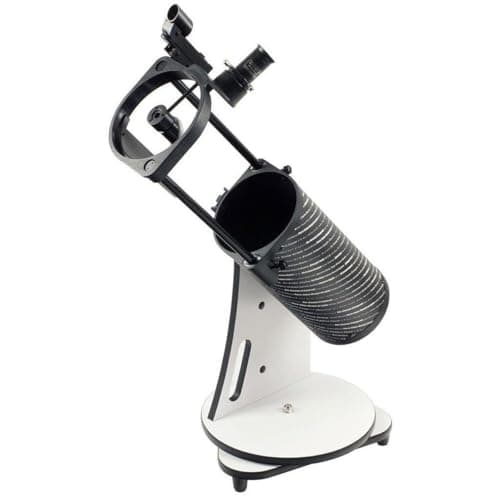 Sky-Watcher Heritage 130 Tabletop Dobsonian 130mm of parabolic mirror at f/5 — enough aperture for galaxies, enough resolution for planets. | The most of both for the least money | |
| 2 | 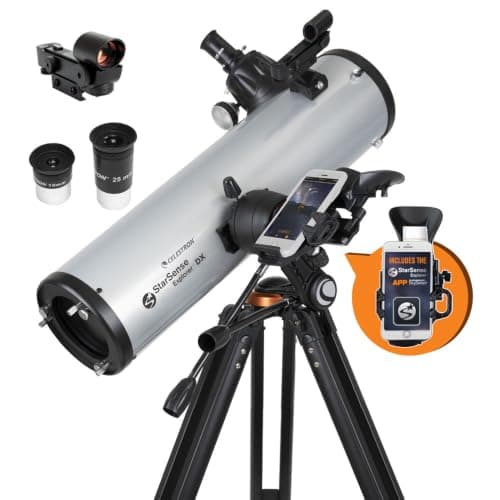 Celestron StarSense Explorer DX 130AZ 130mm f/5 parabolic on a 49-inch tripod with dual-axis slow-motion controls, plus the StarSense app. | The same optics with a tripod and a phone that finds the targets | $499.95 on Amazon #ad How we’re funded · price as of October 18, 2026 |
| 3 | No image Celestron StarSense Explorer DX 102AZ 102mm of sealed refractor with no central obstruction, on the steadiest mount in the range. | When planets are the priority and galaxies are the bonus | |
| 4 | 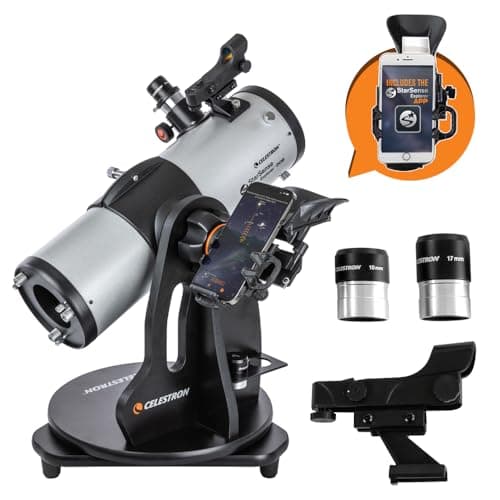 Celestron StarSense Explorer 114mm Tabletop Dobsonian 114mm parabolic at f/4 with app guidance — built for finding faint things, not magnifying them. | The widest, brightest low-power view for the least money |
Rows link to the full write-up further down this page. Prices come from the live price layer only; where there is no live figure the button reads “Check price” rather than showing a number we remembered.
What each aperture actually shows
Published specifications do not tell you what the evening looks like, so here is the honest version, consistent with what we say on what you can actually see.
- Jupiter — belts and up to four moons from about 50x in any telescope on this page. More aperture sharpens the belts; it does not add planets.
- Saturn — the rings resolve as a distinct oval from around 50x, and the Cassini division needs steady air, good contrast and roughly 150x. This is where the refractor earns its place.
- Mars — small and disappointing except near opposition, at any aperture in this range. Anyone promising you surface detail on Mars with a beginner telescope is selling something.
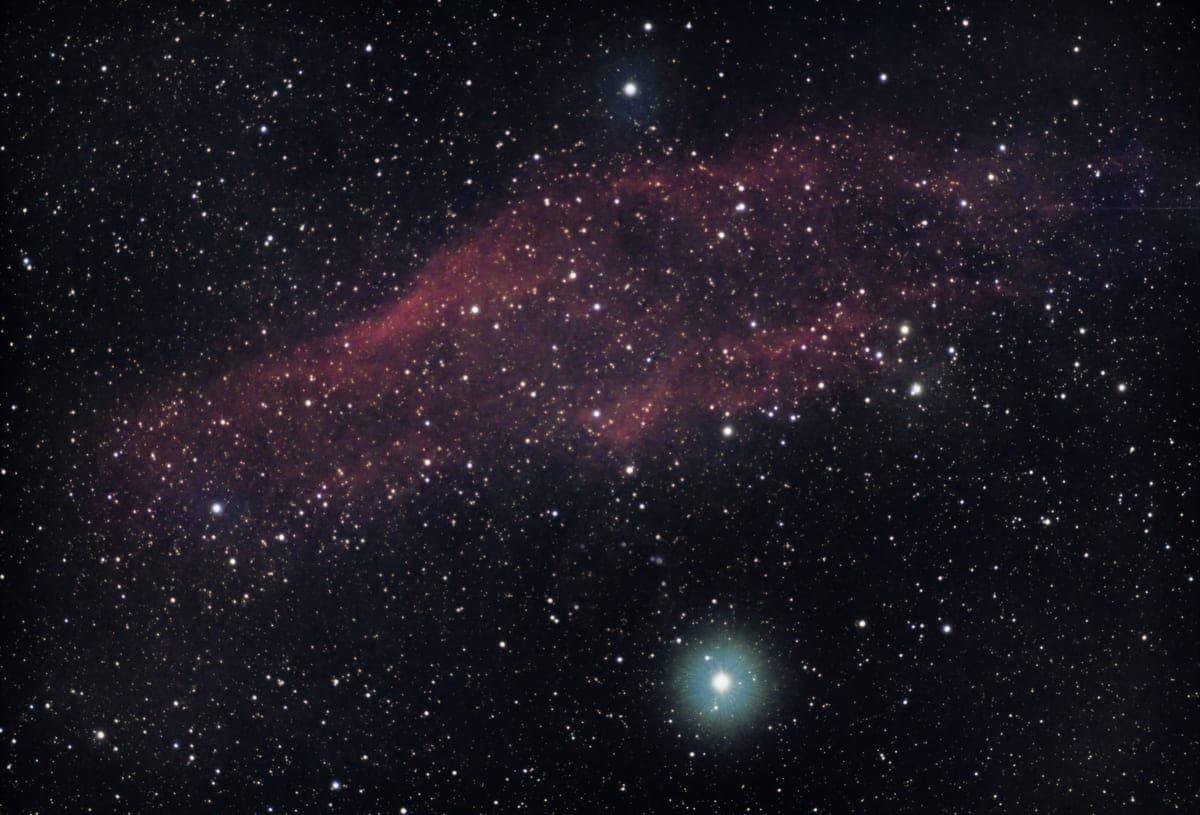
- The Orion Nebula — a gray patch with the Trapezium stars inside it at 70mm; noticeably more structure at 130mm. Still gray, always gray: color in astrophotographs comes from long exposures, not from eyes.
- The Andromeda Galaxy — a faint oval smudge under a dark sky at 130mm, and often invisible from a bright suburb at any aperture on this list.
The magnification trap, specific to this question
Search for a planets-and-galaxies telescope and the results will be full of boxes advertising 300x, 525x and higher. The site's standing arithmetic applies: a telescope's realistic ceiling is roughly twice its aperture in millimeters, and manufacturers publish their own figure at 60x per inch of aperture.
For galaxies the number is worse than irrelevant — it is actively wrong. Magnifying a faint object spreads its light over more of your retina and makes it dimmer. The right eyepiece for a galaxy is usually the LONGEST one you own. We work the whole argument through on toy brands versus real optics.
If you can only spend once, spend it here
- Aperture, up to what an adult will actually carry. 130mm is the sweet spot on this site; 18 lbs of DX 130AZ is the point where carrying becomes the limiting factor.
- A mount that settles fast. Slow-motion controls beat a bigger mirror on a shaky head for planetary work.
- One extra eyepiece, around 6mm. Both 130mm models ship at about 21 percent of their published ceiling, which is the gap that disappoints people in week two.
- A darker sky, which is free. Twenty minutes of driving usually beats any upgrade you can buy for the galaxy half of this question.
What we did and did not do
We have not handled these telescopes. Every specification here was read from the manufacturer's published page for that model, linked below and re-checked on the date at the top of this page; the light-gathering ratios, ceilings and comparisons are our arithmetic on those figures, shown so you can repeat them.
No price appears in this prose. Live figures come only from our price feed with the date they were checked, and where there is no live figure the button reads *check price*. Our full method is on the methodology page.
The picks in full
Pick 1
Sky-Watcher Heritage 130 Tabletop Dobsonian
The most of both for the least money
The arithmetic
130mm of aperture collects roughly 3.4 times the light of a 70mm refractor — the single biggest jump available at anything like gift money. At 650mm focal length, a common 25mm eyepiece gives 26x and a 10mm gives 65x. The rule of thumb astronomers use for a maximum useful magnification is about 2x the aperture in millimeters, which puts a sensible ceiling near 260x on a genuinely steady night.
If one telescope has to do both jobs on a normal budget, this is the shape it takes: a 130mm parabolic mirror at f/5.
For galaxies, aperture is the entire argument. 130mm gathers roughly 3.4 times the light of a 70mm refractor, and faint fuzzy objects are a light-collection problem before they are anything else. At 650mm focal length a 25mm eyepiece gives 26x with a wide, bright field — exactly the low-power view that makes a galaxy visible at all.
For planets, the same mirror resolves fine detail well, and the practical ceiling of about 2x the aperture in millimeters puts roughly 260x within reach on a steady night. You will not use that often. Most good planetary views happen far below it.
The compromise is honest: a fast Newtonian has a central obstruction that softens contrast slightly against a refractor of the same aperture, and a collapsible tube collects dust and will eventually need collimation. Full review.
Skip it if
There is no solid, waist-height surface outdoors. It is a tabletop instrument with no tripod, and Sky-Watcher does not publish its supplied eyepieces or assembled weight, so we cannot check its box against a ceiling.
| Optical design | Newtonian reflector, borosilicate parabolic primary mirror |
|---|---|
| Aperture | 130mm |
| Focal length | 650mm |
| Focal ratio | f/5 |
| Mirror coatings | Sky-Watcher Radiant Aluminum Quartz (RAQ) |
| Focuser | 1.25" helical |
| Mount | Tabletop Dobsonian base, Teflon bearings, altitude locking knob |
| Tube | Collapsible for storage, retains collimation |
| What the box does not do | Sky-Watcher's product page does not publish the supplied eyepieces, finderscope or assembled weight, so we do not state them. No tripod — this is a tabletop instrument. The collapsible tube is open to the air, so it collects dust and will need occasional mirror cleaning and collimation. |
Specifications from Sky-Watcher USA — Heritage 130 Tabletop Dobsonian. We have not handled this one — everything above is the published spec sheet plus our own arithmetic on it.
Pick 2
Celestron StarSense Explorer DX 130AZ
The same optics with a tripod and a phone that finds the targets
The arithmetic
The most aperture of anything on this site: 130mm collects about 1.6 times the light of the DX 102AZ, 1.3 times the LT 114AZ and roughly 3.4 times a 70mm refractor, and Celestron's published limiting magnitude of 13.1 is the deepest we list. The published 307x ceiling is 60x per inch of aperture (5.11 inches times 60 is 306.6). The supplied eyepieces give 26x and 65x, so the box reaches about 21 percent of that ceiling — and, like the DX 102AZ, the DX omits the 2x Barlow the cheaper LT models include. The 635mm tube for a 650mm focal length is what a plain Newtonian looks like: nothing in the light path is stretching the focal length.
Galaxies are hard to find, which is the part most guides skip. A telescope that shows the Andromeda Galaxy is useless if nobody in the house can point it there, and star-hopping to a faint smudge is a genuine skill.
This is the same 130mm f/5 parabolic mirror as the Heritage with the finding problem solved: the app reads the sky through the phone camera and walks you to the target with arrows. For deep-sky objects specifically, that is worth more than it is for the Moon, because you can find the Moon yourself.
The slow-motion controls matter on the planetary side too — at higher magnification Jupiter drifts out of the field quickly, and creeping the tube along with a knob beats nudging it by hand.
It ships with 26x and 65x and no Barlow, about 21 percent of its published 307x ceiling, so budget an eyepiece around 6mm. Full review.
Skip it if
Weight or budget decide it. At 18 lbs it is the heaviest telescope on this site, it sits at the top of our price range, and it needs a phone running Android 12 or iOS 18 on an iPhone XR or newer.
| Optical design | Newtonian reflector, parabolic primary mirror |
|---|---|
| Aperture | 130mm (5.11") |
| Focal length | 650mm (25.59") |
| Focal ratio | f/5 |
| Optical tube length | 635mm (25") |
| Eyepieces supplied | 25mm (26x) and 10mm (65x) |
| Barlow | Not included |
| Finderscope | StarPointer red dot |
| Mount | Manual alt-azimuth, dual-axis slow-motion controls |
| Tripod | 1244.6mm (49") max height |
| Secondary mirror obstruction | 34% by diameter, 11% by area |
| Highest useful magnification | 307x |
| Limiting stellar magnitude | 13.1 |
| Total kit weight | 18 lbs (8.16 kg) |
| Phone requirement | Android 12 and later; iOS 18 and newer, iPhone XR and newer |
| What the box does not do | No Barlow, so the top supplied magnification is 65x against a 307x ceiling — a shorter eyepiece belongs in the budget. At 18 lbs total this is the heaviest telescope on this site, and the mount and tripod alone weigh 9.2 lbs; an adult carries it, every session. A reflector's mirrors will eventually need collimation, and at f/5 the alignment matters more than it does on a slower tube. |
Specifications from Celestron — StarSense Explorer DX 130AZ specifications. We have not handled this one — everything above is the published spec sheet plus our own arithmetic on it.
#ad How we’re funded · price as of October 18, 2026
Pick 3
Celestron StarSense Explorer DX 102AZ
When planets are the priority and galaxies are the bonus
The arithmetic
The jump from 70mm to 102mm is the biggest single upgrade on this site: light-gathering scales with the square of aperture, so a 102mm objective collects about 2.1 times what a 70mm does. The published limiting magnitude moves from 11.7 to 12.5 and the useful ceiling from 165x to 240x. The cost is 14.2 lbs — this is a two-hands, one-trip-to-the-garden telescope, not a carry-it-yourself one.
A refractor has one advantage that has nothing to do with aperture: no secondary mirror sits in the light path. A reflector's obstruction scatters a little light and slightly softens fine contrast, and fine contrast is exactly what planetary detail is made of.
So for Jupiter's belts and Saturn's ring division, 102mm of clean refractor punches above its aperture. For a galaxy, it simply collects less light than a 130mm mirror and no amount of contrast makes up for that.
It also never needs collimating, which for a household that will not learn to align mirrors is a real feature rather than a spec-sheet nicety.
The honest catch is the same one its review leads with: no Barlow in the box, 66x supplied against a 240x ceiling, and 14.2 lbs to carry. Full review.
Skip it if
Faint objects are the point. 102mm collects about 62 percent of the light of a 130mm, and Celestron's published limiting magnitude is 12.5 against 13.1 — an aperture gap no eyepiece closes.
| Optical design | Refractor |
|---|---|
| Aperture | 102mm (4.01") |
| Focal length | 660mm (25.98") |
| Focal ratio | f/6.5 |
| Eyepieces supplied | 25mm (26x) and 10mm (66x) |
| Finderscope | StarPointer red dot |
| Mount | Manual alt-azimuth |
| Tripod | 1244.6mm (49") max height |
| Highest useful magnification | 240x |
| Limiting stellar magnitude | 12.5 |
| Total kit weight | 14.2 lbs (6.44 kg) |
| What the box does not do | No Barlow in the box, so the supplied top magnification is 66x against a 240x ceiling — you will want a shorter eyepiece eventually. At 14.2 lbs assembled, a child under about ten will not be setting this up alone. |
Specifications from Celestron — StarSense Explorer DX 102AZ specifications. We have not handled this one — everything above is the published spec sheet plus our own arithmetic on it.
Pick 4
Celestron StarSense Explorer 114mm Tabletop Dobsonian
The widest, brightest low-power view for the least money
The arithmetic
A parabolic mirror rather than the spherical one in cheaper reflectors, which is what keeps a fast f/4 sharp at the edges. 114mm gathers roughly 2.7 times the light of a 70mm refractor, and the published limiting magnitude of 12.8 is the deepest on this site. The supplied eyepieces only reach 45x against a 269x ceiling, so the box gives you wide, bright, easy views and leaves the high-power ones to buy later.
The f/4 tabletop Dobsonian is the deep-sky end of this list: a fast, wide field that frames big star clusters and makes faint objects easier to land on.
A parabolic mirror at f/4 is not optional — a spherical one that fast would visibly smear stars toward the edge — and Celestron publishes the parabolic figure here.
Its published limiting stellar magnitude of 12.8 matches the LT 114AZ and beats the DX 102AZ, so on galaxies it out-performs a telescope that costs considerably more.
What it is not is a planetary instrument out of the box. 45x will show Saturn as a distinct oval and Jupiter's moons, and then you will want more. Full review.
Skip it if
Planets are the main event. The supplied eyepieces reach only 45x against a 269x ceiling, so planetary work here means buying a short eyepiece on day one.
| Optical design | Newtonian reflector, parabolic primary mirror |
|---|---|
| Aperture | 114mm (4.48") |
| Focal length | 450mm (17.71") |
| Focal ratio | f/4 |
| Eyepieces supplied | 17mm (26x) and 10mm (45x) |
| Finderscope | StarPointer red dot |
| Mount | Alt-azimuth tabletop Dobsonian base |
| Highest useful magnification | 269x |
| Limiting stellar magnitude | 12.8 |
| Total kit weight | 12.6 lbs (5.71 kg) |
| What the box does not do | No tripod — it is a tabletop instrument and needs a solid surface at the right height, which is a real planning problem in a garden. A reflector's mirror can drift out of alignment; expect to learn collimation eventually. |
Specifications from Celestron — StarSense Explorer 114mm Dobsonian specifications. We have not handled this one — everything above is the published spec sheet plus our own arithmetic on it.
Questions people actually ask
- Can one telescope show both planets and galaxies?
- Yes, with a compromise. A 130mm parabolic reflector at f/5 has enough aperture for galaxies to register and enough resolution for Jupiter and Saturn. A refractor gives cleaner planetary contrast with less light; a bigger, faster mirror gives deeper views with softer contrast.
- What size telescope do you need to see galaxies?
- Aperture and sky darkness both matter, and darkness usually matters more. 130mm under a genuinely dark sky shows the Andromeda Galaxy as a faint oval; the same telescope in a bright suburb may show nothing at all. No beginner telescope shows galaxy color or spiral arms.
- Is a refractor or a reflector better for planets?
- A refractor of the same aperture gives slightly better planetary contrast because it has no secondary mirror obstructing the light path. Celestron publishes a 34 percent obstruction by diameter for its 130mm reflectors. A larger reflector can still out-resolve a smaller refractor.
- What magnification do you need for planets and galaxies?
- Nearly opposite numbers. Planets are usually best between about 100x and 200x on steady air. Galaxies and nebulae are usually best between 25x and 60x, because magnifying a faint object spreads its light and dims it.
- Does light pollution affect planets as much as galaxies?
- No, and this is the most useful thing on this page. Planets are bright enough to cut through city skies almost unchanged. Faint galaxies wash out completely. If your sky is bright, spend on a better mount or eyepiece rather than more aperture.
- What eyepiece should you add first for this kind of viewing?
- Something around 6mm, which gives about 108x on a 650mm telescope and 110x on a 660mm one. Both 130mm models we recommend ship with no Barlow and reach only about 21 percent of their published magnification ceiling out of the box.
Sources
Read next
Where to go from here
- The best kids' telescope to see planets
Planets are the one thing every child asks about. Which telescopes show them properly, and what Jupiter and Saturn genuinely look like at this aperture.
- The best telescope for deep space
Galaxies and nebulae are won with aperture and dark skies, never magnification. What limiting magnitude means in practice, and the telescopes that reach deepest here.
- Celestron StarSense Explorer DX 130AZ review
130mm f/5 parabolic optics with phone guidance and dual-axis slow-motion controls, at 18 lbs. The arithmetic on what the box reaches, and the two cheaper routes to the same mirror.
- Sky-Watcher Heritage 130 review
130mm of parabolic mirror that collapses for storage. The biggest single jump in what a child can see, and the planning problem that comes with it.
- What you can actually see with a kids' telescope
The honest target-by-target list for 70mm, 76mm and 114mm telescopes, so nobody is disappointed on night one.
- Refractor or reflector for a child?
Mirrors are cheaper per millimeter of aperture; lenses never need aligning. Which trade suits which child, with the arithmetic on both.