Binoculars
Celestron SkyMaster Pro ED 15x70 review
Eleven percent more money, forty-four percent more weight, and two accessories fewer than the model below it.
By Scooter M. · published October 17, 2026
I'm not an astronomer and I don't have a lab. I'm someone who's genuinely into this — I read the manuals, compile the published specs, and do the arithmetic the box doesn't do for you. No lab coat. How we pick.
How this is funded. Lens & Lightyear earns a commission when you buy through a link on this page, at no extra cost to you. It does not change which products we pick or what we say about them — every card below carries a real reason to skip it. Prices are pulled live and were last verified October 18, 2026. Full disclosure.
The short answer
Only if ED glass at 70mm is specifically what you want. It publishes the deepest limiting magnitude of any binocular here, but it costs about 11 percent more than the non-ED Pro 15x70 while weighing 44 percent more and shipping without the tripod adapter and sight rail that cheaper model includes.
This was the last SkyMaster on the market without a page on this site, so reviewing it completes the family. It turns out to be the one model in the range where paying more gets you less equipment, which is not a sentence we expected to write.
What it publishes, and what checks out
The genuinely useful figure here is one Celestron publishes for very few binoculars: a limiting stellar magnitude, given as 11.73 under ideal skies, 10.73 moderate and 9.73 poor. That answers how faint a star you can reach rather than how bright the image looks, and it is the deepest figure on this site for a binocular.
It can also be checked against the only other binocular here that publishes one. The Nature DX ED 10x50 publishes 10.99 on 50mm of aperture:
- Magnitude gap: 11.73 minus 10.99 = 0.74
- Implied light ratio: 10 to the power of (0.74 / 2.5) = about 1.98 times
- Aperture ratio by area: 70 squared over 50 squared = 1.96 times
Under one percent apart. The published figure is consistent with the physics, which is a good sign about the sheet — and it is worth noting that the three sky conditions again step by exactly 1.00 magnitude each, so they are a modelled ladder applied to sky quality rather than three measurements.
And the one row that does not check out
Celestron publishes three figures describing how much light this binocular delivers. Two reconcile exactly with a plain 15x on 70mm. The third does not, and because we have now looked at all three Pro ED sheets, the disagreement turns out to follow a pattern.
- Twilight factor, published 32.4. The square root of 15 x 70 = the square root of 1050 = 32.404. Match.
- Relative brightness, published 21.78. The exit pupil squared, (70 / 15) squared = 21.778. Match — and it encodes an exit pupil of 4.667mm.
- Exit pupil, published 4.4mm. 70 divided by 15 = 4.667mm. No match, and it disagrees with the relative-brightness row two lines above it.
We found exactly this on the Pro ED 7x50, where the sheet publishes a 6.4mm exit pupil against a formula figure of 7.143mm while its relative brightness of 51.02 encodes 7.143mm. Put the three Pro ED models side by side and the shape of it is clear.
| Model | Formula (obj / mag) | Published exit pupil | Implied by its own relative brightness |
|---|---|---|---|
| Pro ED 7x50 | 7.143mm | 6.4mm — 10.4% lower | 7.143mm |
| Pro ED 15x70 | 4.667mm | 4.4mm — 5.7% lower | 4.667mm |
| Pro ED 20x80 | 4.000mm | 4.0mm — matches | 4.000mm |
Our arithmetic on Celestron's published figures for all three Pro ED models, each linked in the sources of its own review. The only model where the published exit pupil matches the formula is the one where the division happens to give a round number.
So on both models where objective divided by magnification lands on a non-round number, the published exit pupil is lower than the formula and lower than what the same page's relative brightness implies. On the one where the division is exactly 4.0, everything agrees.
In practice the gap is small and it does not change the ranking on this page. Either figure leaves this model dimmer per unit of image than a 7x50 and brighter than the 25x70 we tell people to avoid, which is the same place the standard 15x70 sits. The arithmetic behind that is on which SkyMaster should you buy.
Where the money actually goes
The comparison that decides this review is against the non-ED Pro 15x70 — same aperture, same magnification, about 11 percent apart on price at the time of writing.
| Pro ED 15x70 | Pro 15x70 (non-ED) | SkyMaster 15x70 | |
|---|---|---|---|
| Magnification / objective | 15x, 70mm | 15x, 70mm — identical | 15x, 70mm — identical |
| Objective glass | Extra-low dispersion (ED) | Standard | Standard |
| Coatings | Fully multi-coated, XLT | Fully multi-coated, XLT | Multi-coated |
| Prisms | BaK-4 porro | BaK-4 porro | BaK-4 porro |
| Angular field of view | 4.4 deg | 4.4 deg | 4.4 deg |
| Exit pupil (published) | 4.4mm — disputed by its own sheet | 4.6mm — the formula figure | 4.7mm — the formula figure |
| Eye relief | 15.7mm | 17mm | 18mm |
| Close focus | 42.7 ft (13 m) | 49.2 ft (15 m) | 43 ft (13 m) |
| Weather sealing | Waterproof IPX7, nitrogen filled | Waterproof, nitrogen filled | Water resistant |
| Limiting stellar magnitude | 11.73 ideal | Not published | Not published |
| Tripod adapter in box | No | Yes | No |
| Reflex sight rail | No | Yes | No |
| Weight | 73.7 oz (4.61 lbs) | 51 oz (3.19 lbs) | 48 oz (3 lbs) |
Every figure from Celestron's own published specification pages for the three models, linked at the foot of this page. Bold marks the better figure for astronomy use. The ED glass is absent from the comparison because Celestron publishes no figure for it.
Read the bottom four rows together. Against the non-ED model you pay more, carry 22.7 oz more, and lose both the tripod adapter and the reflex sight rail. Against the standard 15x70 you pay substantially more, carry 25.7 oz more, and gain sealing, XLT coatings, ED glass and a published limiting magnitude.
That middle column is the one to beat, and this model does not beat it on any row a beginner would feel. It wins on objective glass and on a published depth figure; it loses on weight, eye relief, exit pupil as printed, and two pieces of hardware that are not optional at 15x.
4.61 lbs at 15x means a tripod, and the adapter is extra
At 15x every tremor in your hands is multiplied fifteen times, so no 15x70 of any kind is a handheld instrument for more than a glance. That is true of all three models in the table and it is the first thing to budget for.
What makes it sting here is the box. Celestron lists a tripod adapter in the non-ED Pro 15x70's included items and lists none in this one, so the more expensive binocular is the one that needs an extra purchase before it can be used as intended. There is no reflex sight rail either, which on a 4.4 degree field is the standard fix for the genuinely hard part — finding the target. Our binocular tripod adapter guide covers what to buy.
Quick picks
The Pro ED 15x70 against the two 70mm models we would buy instead
| # | Product | Best for | Price |
|---|---|---|---|
| 1 | 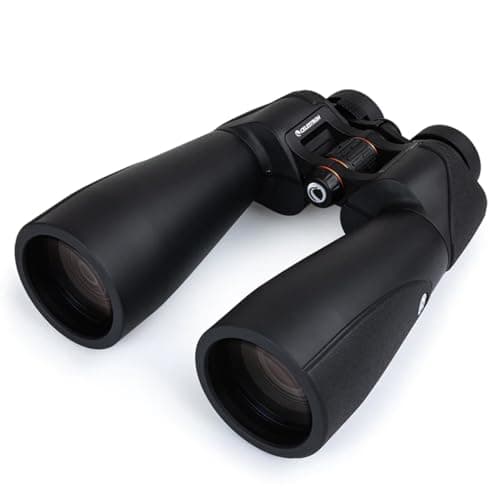 Celestron SkyMaster Pro ED 15x70 The deepest published limiting magnitude of any binocular on this site, in the heaviest 70mm body in the line, with the least hardware in the box. | Someone who specifically wants ED glass at 70mm and already owns a heavy tripod | |
| 2 | 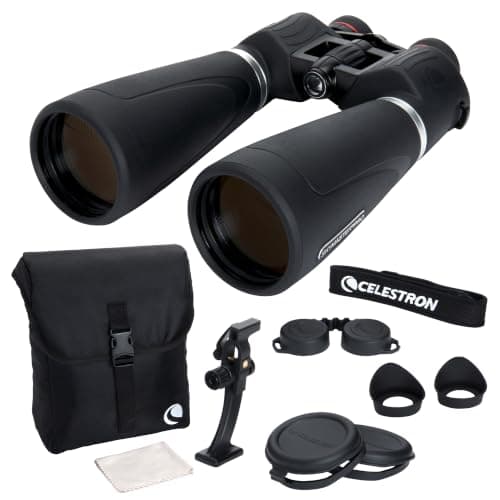 Celestron SkyMaster Pro 15x70 The same 15x on the same 70mm, 22.7 oz lighter, cheaper, and it brings the tripod adapter and sight rail the ED leaves out. | Almost anyone who was considering the ED version | $279.49 on Amazon #ad How we’re funded · price as of October 18, 2026 |
| 3 | 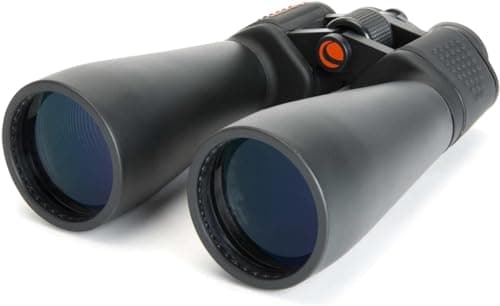 Celestron SkyMaster 15x70 The same 15x70 optical format at the bottom of the line's price range — unsealed, plainly coated, and 25.7 oz lighter than the ED. | Anyone who wants the 70mm view for the least money |
Rows link to the full write-up further down this page. Prices come from the live price layer only; where there is no live figure the button reads “Check price” rather than showing a number we remembered.
How this compares with the rest of the Pro ED tier
Three Pro ED models now have pages here, and they are not equally easy to argue for.
| Model | The case for it | The case against |
|---|---|---|
| Pro ED 7x50 | The only SkyMaster you can hold. Widest field and longest eye relief in the line. | 2.77 lbs is heavy for the format, and its exit pupil row disputes its own sheet. |
| Pro ED 15x70 (this page) | Deepest published limiting magnitude of any binocular here, fully sealed. | 44 percent heavier than the non-ED twin and ships without its adapter or sight rail. |
| Pro ED 20x80 | Most aperture in the tier, best-built, all three light figures self-consistent. | 43 percent heavier than its non-ED twin, and also drops the sight rail. |
The common thread: on all three, the ED version is substantially heavier than the standard model of the same aperture and magnification, and on two of the three it arrives with less hardware.
If there is one lesson across the tier it is that ED glass on these models is sold with a weight penalty and an accessory penalty, not just a price premium — and none of the three publishes a figure for the optical benefit you are paying for.
Who should buy this
| If this is you | Buy | Why |
|---|---|---|
| You want ED glass at 70mm and own a tripod and adapter already | The Pro ED 15x70 | You will not notice the missing accessories, and the 11.73 limiting magnitude is the deepest here. |
| You were buying the ED because it is the top of the 15x70 range | The non-ED Pro 15x70 | Same aperture and magnification, 22.7 oz lighter, cheaper, and the adapter and sight rail are in the box. |
| You want the 70mm view for the least money and will store it indoors | The standard SkyMaster 15x70 | Same light grasp, the most eye relief of the three, at the bottom of the line's price range. |
| You are buying for a child | None of these | 4.61 lbs at 15x on a tripod is adult equipment. Start at binoculars for stargazing or by age. |
That last row is the honest one for a site mostly about children's optics. Every 15x70 is a tripod instrument, and a 7x50 puts more light into a dark-adapted young eye with no mount at all. This page exists because the SkyMaster family deserved finishing, not because a 4.61 lb binocular belongs on a gift list.
What we did and did not do
We have not handled or looked through this binocular and we do not say otherwise. Every figure above was read from Celestron's own published specification pages for the Pro ED 15x70, the non-ED Pro 15x70 and the standard SkyMaster 15x70, re-checked on the date at the top of this page, and linked in the sources below. The twilight-factor and relative-brightness derivations, the exit-pupil comparison across the three Pro ED models, the magnitude-to-light-ratio conversion, the aperture area ratio, the weight differences and the pound conversions are our arithmetic on those published figures, shown in full so you can redo each one.
We have not resolved the exit-pupil disagreement and we have not estimated how much visible improvement the ED glass delivers. Celestron publishes no figure for the second and two conflicting figures bearing on the first. Our standing method is on the methodology page.
At the time of writing this model is listed in stock on Celestron's own store and carries a live offer at the major retailer. The price beside our buy button comes from the live feed on the date shown there, never from us.
The picks in full
Pick 1
Celestron SkyMaster Pro ED 15x70
Someone who specifically wants ED glass at 70mm and already owns a heavy tripod
The arithmetic
Two of the three published light figures reconcile with a plain 15x on 70mm and one does not. Twilight factor is the square root of 15 x 70 = the square root of 1050 = 32.404, published as 32.4. Relative brightness is the exit pupil squared, and (70 / 15) squared = 21.778, published as 21.78 — which encodes an exit pupil of 4.667mm. But the exit pupil row itself is published as 4.4mm. The same disagreement appears on the Pro ED 7x50 (published 6.4mm against a formula 7.143mm) and is absent from the Pro ED 20x80, where 80 / 20 happens to be exactly 4.0. In other words, on both ED models where the division gives a non-round number, the published exit pupil is LOWER than both the formula and the figure the same sheet's relative brightness implies. That is consistent with a measured or derated value on that row, or with a rounding convention, and published data cannot distinguish the two. The published limiting stellar magnitude of 11.73 under ideal skies does check out: against the Nature DX ED 10x50's published 10.99 the 0.74 magnitude gap implies a light ratio of about 1.98, and the aperture ratio by area is 70 squared over 50 squared = 1.96 — under one percent apart. The figure that decides the purchase is weight: 73.7 oz is 4.61 lbs, against 51 oz (3.19 lbs) for the non-ED Pro 15x70, so the ED body is about 44 percent heavier for the same aperture and magnification.
This was the last SkyMaster without a page on this site, and reviewing it finally completes the family. It is also the hardest one to recommend, and the reason is not the glass.
Start with what it genuinely delivers. Celestron publishes a limiting stellar magnitude of 11.73 under ideal skies, which is the deepest figure of any binocular we have covered — the Nature DX ED 10x50 publishes 10.99. That difference checks out against the physics: a 0.74 magnitude gap implies about 1.98 times the light, and the aperture ratio by area is 70 squared over 50 squared, which is 1.96. Under one percent apart.
The build matches the rest of the Pro ED tier: BaK-4 porro prisms, fully multi-coated with XLT, waterproof to IPX7, nitrogen filled, limited lifetime warranty. If a binocular has to survive dew, salt air or a damp shed, that sealing is the one thing on this list you cannot retrofit.
Now the problem. It weighs 73.7 oz — 4.61 lbs — against 51 oz (3.19 lbs) for the non-ED Pro 15x70. That is about 44 percent more mass for the same 70mm aperture and the same 15x. And where the non-ED model ships with a tripod adapter and a detachable reflex sight rail, Celestron lists neither in this box. At 15x a tripod is compulsory, so the cheaper model gets you observing and this one sends you shopping.
The ED glass itself is the one claim we cannot test. Celestron describes it in prose and publishes no figure for it, and we have not looked through this binocular. What we can say is that nothing about ED glass changes how much light arrives — that is set by the aperture and the magnification, both identical to the model below.
Skip it if
You were buying it because it is the top of the 15x70 range. It costs about 11 percent more than the non-ED Pro 15x70 and arrives without the tripod adapter and reflex sight rail that cheaper model includes, while weighing 22.7 oz more. At 15x you must buy a tripod either way, so the ED version makes you buy the adapter as well.
| Item number | 72034 |
|---|---|
| Magnification | 15x |
| Objective diameter | 70mm (2.75") |
| Prisms | BaK-4 porro |
| Coatings | Fully multi-coated, XLT, with Extra-Low Dispersion (ED) objective glass |
| Angular field of view | 4.4 degrees |
| Linear field of view | 230 ft at 1000 yds (77 m) |
| Exit pupil | 4.4mm (.17") as published — see note below |
| Eye relief | 15.7mm (.62") |
| Close focus | 42.7 ft (13 m) |
| Interpupillary distance | 56mm-72mm (2.20"-2.83") |
| Diopter adjustment | Plus or minus 3 |
| Twilight factor | 32.4 |
| Relative brightness | 21.78 |
| Limiting stellar magnitude | 11.73 ideal, 10.73 moderate, 9.73 poor |
| Weight | 73.7 oz (2089 g) |
| Dimensions | 258mm x 220mm x 85mm (10.2" x 8.7" x 3.4") |
| Tripod adaptable | Yes, adapter NOT included |
| Weather sealing | Waterproof (IPX7), nitrogen filled |
| Included | Objective lens caps, eyepiece covers, rainguard, neck strap, lens cloth, non-silica desiccant, case, manual |
| Warranty | Limited lifetime |
| What the box does not do | No tripod adapter and no reflex sight rail — both of which the cheaper non-ED Pro 15x70 includes, so this model costs more and arrives with less hardware. No tripod, and at 15x and 4.61 lbs it is unusable without one. Celestron describes the ED glass only in prose and publishes no figure for it, so the headline optical claim cannot be checked; the exit pupil row contradicts the same sheet's relative brightness, so that one cannot be relied on either. A 42.7 ft close focus rules out daytime use at any normal distance. |
Specifications from Celestron — SkyMaster Pro ED 15x70 specifications. We have not handled this one — everything above is the published spec sheet plus our own arithmetic on it.
Pick 2
Celestron SkyMaster Pro 15x70
Almost anyone who was considering the ED version
The arithmetic
Optically this is the standard 15x70: the same 15x on 70mm, the same published 4.4 degree field and the same 231 ft linear field at 1000 yards. Celestron publishes a 4.6mm exit pupil against the standard model's 4.7mm, which is the same number inside rounding. The whole difference is build — waterproof and nitrogen filled against merely water resistant, fully multi-coated XLT against plain multi-coated, and a box that includes the tripod adapter and a reflex sight rail that the standard model leaves out. That costs 3 oz, 51 against 48. The thing to know before paying the Pro premium is what it buys: sealing, coatings and the mount hardware, not reach.
This is the honest recommendation, and the margin is not close. Celestron publishes 51 oz for the non-ED Pro 15x70 against 73.7 for the ED — 3.19 lbs against 4.61. On a tripod head that is the difference between steady and fighting it; in a bag it is the difference between taking it to a dark site and not.
It also publishes a 4.6mm exit pupil, which is what 70 divided by 15 actually gives, where the ED model's sheet prints 4.4mm (see the section below — that row does not agree with the ED sheet's own relative brightness). And it keeps the same IPX7-class sealing, the same XLT coatings and the same BaK-4 porro prisms.
Most usefully for a buyer at 15x, its box includes the tripod adapter and a detachable reflex sight rail for an optional red dot finder. Aiming a 4.4 degree field at something faint is the hard part of using any big binocular, and the cheaper model is the one that gives you the mount for the accessory that fixes it.
It does not have its own page on this site yet; it is ranked against the rest of the line on which SkyMaster should you buy, where it sits in the middle of the range on both price and capability.
Skip it if
You need the deeper published limiting magnitude or specifically want ED objective glass. Those are the two things the ED version adds, and no amount of saved weight substitutes for them if they are what you came for.
| Item number | 72030 |
|---|---|
| Magnification | 15x |
| Objective diameter | 70mm (2.75") |
| Prisms | BaK-4 porro |
| Coatings | Fully multi-coated, XLT |
| Angular field of view | 4.4 degrees |
| Linear field of view | 231 ft at 1000 yds (77 m) |
| Exit pupil | 4.6mm (.18") |
| Eye relief | 17mm (.67") |
| Close focus | 49.2 ft (15 m) |
| Weight | 51 oz (1450 g) |
| Tripod adaptable | Yes, tripod adapter included |
| Weather sealing | Waterproof, nitrogen filled |
| Included | Tripod adapter, reflex sight rail, objective lens caps, interchangeable flared eyecups, rainguard, neck strap, lens cloth, manual |
| Warranty | Limited lifetime |
| What the box does not do | No tripod — the adapter is included, the tripod is not, and 15x needs one. No red dot finder either: the reflex sight rail is a mount for an accessory sold separately. A 49.2 ft close focus is the shortest in the line but still rules out close daytime use. |
Specifications from Celestron — SkyMaster Pro 15x70 specifications. We have not handled this one — everything above is the published spec sheet plus our own arithmetic on it.
#ad How we’re funded · price as of October 18, 2026
Pick 3
Celestron SkyMaster 15x70
Anyone who wants the 70mm view for the least money
The arithmetic
The counter-intuitive number: 70 / 15 = 4.7mm exit pupil, against 7.1mm for a 7x50. More objective glass, but spread across more magnification — so into a child's fully dark-adapted 7mm pupil this delivers roughly (4.7 / 7.1) squared, about 44 percent of the light the cheaper 7x50 does. The 70mm advantage is real only for an adult eye that no longer dilates past 5mm, or on a tripod where the extra reach pays. At 48 oz it is 1.76 times the weight of a 7x50 and 15x magnifies hand tremor fifteen times: this is a tripod instrument, not a handheld one.
Worth putting on the table because it reframes the whole question. The standard SkyMaster 15x70 is 48 oz against the ED's 73.7 — 3 lbs against 4.61 — and sits at the bottom of the line's price range.
It is the same 70mm aperture at the same 15x, so it gathers the same light. Its published exit pupil of 4.7mm is the formula figure, its field is the same 4.4 degrees, and its 18mm of eye relief is actually the most generous of these three.
What you give up is real: water resistant instead of waterproof and nitrogen filled, plain multi-coated instead of fully multi-coated XLT, and no ED glass. For a binocular stored indoors and used from a garden on clear nights, none of those may ever cost you anything.
For this site's usual reader the honest answer at 15x70 is this one plus a tripod and an adapter, with the money saved going on the mount rather than the glass. We lay all of the SkyMasters out side by side on which SkyMaster should you buy.
Skip it if
The binocular will live outdoors or in a damp climate. This is water resistant rather than waterproof and plain multi-coated rather than XLT, and neither can be added later. There is no tripod adapter in this box either.
| Magnification | 15x |
|---|---|
| Objective lens | 70mm (2.75") |
| Prism glass | BaK-4 |
| Lens coatings | Multi-coated |
| Angular field of view | 4.4 degrees |
| Linear field at 1000 yds | 231 ft (77 m) |
| Exit pupil | 4.7mm (.18") |
| Eye relief | 18mm (.71") |
| Close focus | 43 ft (13 m) |
| Weight | 48 oz (1361 g) |
| Tripod adaptable | Yes |
| Environmental | Water resistant |
| What the box does not do | No tripod and no tripod adapter in the box, and it genuinely needs both — 48 oz at 15x cannot be held steady by anyone, let alone a child. Water resistant, not waterproof. A 43 ft close focus rules out any daytime use in a garden. |
Specifications from Celestron — SkyMaster 15x70 specifications. We have not handled this one — everything above is the published spec sheet plus our own arithmetic on it.
Questions people actually ask
- Is the Celestron SkyMaster Pro ED 15x70 worth it?
- Only if ED objective glass at 70mm is specifically what you want. It costs about 11 percent more than the non-ED Pro 15x70, weighs 44 percent more, and ships without the tripod adapter and reflex sight rail that cheaper model includes. Its published limiting magnitude of 11.73 is the deepest of any binocular we have reviewed.
- How much does the SkyMaster Pro ED 15x70 weigh?
- Celestron publishes 73.7 oz, which is 4.61 lbs. That is 22.7 oz more than the non-ED Pro 15x70 at 51 oz and 25.7 oz more than the standard SkyMaster 15x70 at 48 oz, for the same 70mm aperture and the same 15x magnification.
- Does the SkyMaster Pro ED 15x70 come with a tripod adapter?
- No. Celestron lists a tripod adapter in the non-ED Pro 15x70's included items and lists none for this model, and there is no reflex sight rail either. At 15x a tripod is not optional, so the adapter is an extra purchase on top of a more expensive binocular.
- What is the exit pupil of the SkyMaster Pro ED 15x70?
- Celestron publishes 4.4mm, but 70 divided by 15 is 4.67mm, and the same sheet's published relative brightness of 21.78 is exactly 4.67 squared. We report both and do not resolve which is correct, because published data cannot settle it.
- Pro ED 15x70 or the non-ED Pro 15x70?
- The non-ED for almost everyone: identical aperture and magnification, 22.7 oz lighter, cheaper, the same IPX7-class sealing and XLT coatings, and it includes the tripod adapter and sight rail. The ED only if you want the ED objective glass or the deeper published limiting magnitude.
- What does a limiting stellar magnitude of 11.73 mean?
- It is the faintest star the binocular should reach under ideal skies. For scale, the Nature DX ED 10x50 on 50mm publishes 10.99, and that 0.74 magnitude gap works out to about 1.98 times the light — which matches the 1.96 you get by comparing the apertures by area.
Sources
Read next
Where to go from here
- Which Celestron SkyMaster should you buy?
12x60, 15x70, 25x70, 20x80, Pro 15x70, Pro 20x80 or 25x100? Compared on Celestron's own published figures, with the exit-pupil arithmetic that separates them.
- Celestron SkyMaster 15x70 review
The big-binocular option, reviewed honestly: 70mm objectives that deliver less light to a dark-adapted child's eye than a 7x50, and 48 oz that demand a tripod.
- Celestron SkyMaster Pro ED 20x80 review
Top of the SkyMaster line. Every published light figure matches the cheaper Pro 20x80 exactly, because it is the same 20x on the same 80mm — so what you are buying is color correction, for 43 percent more weight and no sight rail.
- Celestron SkyMaster Pro ED 7x50 review
7x50 is the format we recommend more than any other, and this is the expensive version of it: 7.8 degrees of field, 20.8mm of eye relief, IPX7 sealing — and 62 percent more weight than the budget pick it has to beat.
- Celestron SkyMaster 25x100 review
100mm per side puts this in telescope territory, and 8.75 lbs at 25x puts it permanently on a tripod. The arithmetic on what that buys, and what it costs.
- Putting binoculars on a tripod: adapter, tripod, and the height nobody checks
The cheapest fix for the most common binocular disappointment. Which binoculars accept an adapter, what tripod height actually matters for looking up, and what this will not fix.
- The best binoculars for stargazing with kids
The exit pupil calculation that decides which binoculars suit a child, and what a 7x50 actually shows on a first clear night.
- Binoculars for kids, by age
What a child can physically hold at each age, and which published weight and eye-relief figures to check before buying.
- The best stargazing binoculars under $100
Three pairs under $100, judged on exit pupil, prism glass and steadiness rather than on magnification claims — plus the two corners this budget always cuts.