Gifts
The best telescope for kids and adults to share
One instrument, two very different users. The requirements are not the same.
By Scooter M. · published September 6, 2026
I'm not an astronomer and I don't have a lab. I'm someone who's genuinely into this — I read the manuals, compile the published specs, and do the arithmetic the box doesn't do for you. No lab coat. How we pick.
How this is funded. Lens & Lightyear earns a commission when you buy through a link on this page, at no extra cost to you. It does not change which products we pick or what we say about them — every card below carries a real reason to skip it. Prices are pulled live and were last verified October 20, 2026. Full disclosure.
The short answer
Buy more aperture than you would for a child alone, and buy a second pair of binoculars. Shared telescopes fail for two reasons: the adult gets bored of a 70mm within a season, and one eyepiece between two people means somebody is always waiting in the cold.
This is a genuinely different purchase from a child's first telescope, and most buying advice treats it as the same one. A telescope chosen purely for a seven-year-old is chosen around weight and simplicity. A telescope two people will share has to survive an adult's attention span as well, and those two requirements pull in opposite directions.
The four criteria that actually decide it
- Aperture the adult will not outgrow. A child is delighted by the Moon for a year. An adult works through the Moon, the planets and a handful of bright clusters in about six weeks and then wants something fainter. That means 100mm or more, where a child-only purchase can stop at 70mm.
- Who carries it, and whether the child can start alone. This is the criterion nobody lists and it decides how often the telescope is used. If setup requires an adult, sessions happen when the adult is willing. If the child can carry and set up unaided, sessions happen on a whim — and whim is what builds the habit.
- A finding aid that serves the weaker user. In most households neither person knows the sky. A phone-guided telescope removes that as a shared obstacle; a red dot finder means whoever is more patient becomes the permanent operator.
- A second eyepiece to look through. Not a second telescope — a pair of binoculars. This is the cheapest and most effective thing on the page and almost nobody buys it.
Notice what is not on that list: advertised magnification, the number of eyepieces in the box, and a smartphone camera adapter. Those are what the cheapest telescopes compete on, for the reasons we set out on toy brands vs real optics.
Where the two users disagree
| Requirement | What the child needs | What the adult needs | Who should win |
|---|---|---|---|
| Aperture | Enough for the Moon and planets — 70mm does it | Enough for faint objects — 100mm and up | The adult. A child is not disadvantaged by extra aperture; an adult is genuinely limited by too little. |
| Weight | Light enough to carry alone | Irrelevant | The child, if independence matters to you. Otherwise the adult carries it. |
| Setup complexity | As close to zero as possible | Can handle a tripod and a diagonal | The child. Complexity the child cannot manage converts the telescope into an adult's hobby. |
| Finding things | Needs real help | Usually also needs real help | Both. This is the one requirement where their interests align exactly. |
| Upgrade path | Will not think about it | Will want a better eyepiece within months | The adult. Check the diagonal is a standard 1.25 inch so aftermarket eyepieces fit. |
Quick picks
Telescopes for a household, not just a child
| # | Product | Best for | Price |
|---|---|---|---|
| 1 | 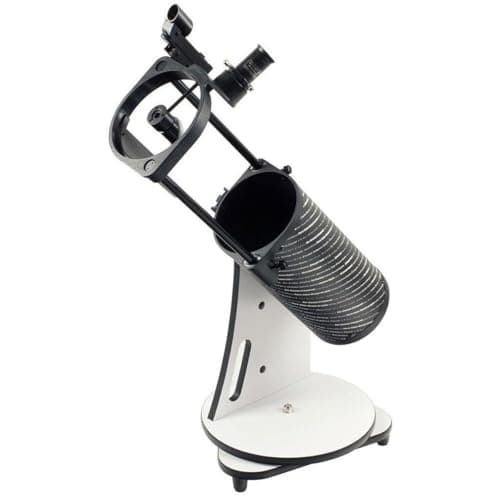 Sky-Watcher Heritage 130 Tabletop Dobsonian 130mm of parabolic mirror — roughly 3.4 times the light of a 70mm — and it collapses for storage. | The most aperture both of you will still want in three years | |
| 2 | No image Celestron StarSense Explorer DX 102AZ 102mm on a full 49-inch tripod, with an app that steers both of you onto the target. | When the adult will do the setting up | |
| 3 | 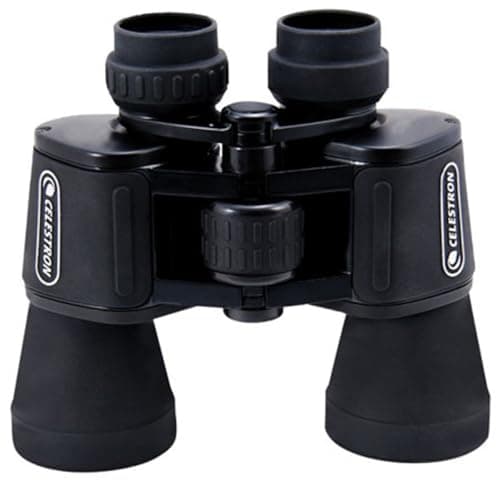 Celestron UpClose G2 10x50 10x50 binoculars with a 5mm exit pupil — the cheapest fix for the real problem with sharing. | The second instrument, so nobody is waiting their turn | $64.53 on Amazon #ad How we’re funded · price as of October 20, 2026 |
Rows link to the full write-up further down this page. Prices come from the live price layer only; where there is no live figure the button reads “Check price” rather than showing a number we remembered.
The 1.25 inch rule, and why it matters more here
On a child-only purchase, the eyepiece fitting size is a footnote. On a shared telescope it is a real decision, because the adult is the one who will want to improve it.
A 1.25 inch diagonal is the standard, and it means the entire aftermarket of eyepieces and filters fits. A 0.96 inch diagonal — still found on the cheapest telescopes — is a dead end: the upgrade path that would rescue the telescope in year two simply does not exist. Every pick on this page takes standard 1.25 inch accessories.
How to run a session with two people
- Set up 30 minutes early. Optics need to reach air temperature or the image shimmers. Use that half hour on the binoculars — it is also roughly how long eyes take to dark-adapt.
- Let the child find the target. It is slower and it is the entire point. An adult who takes over the finder ends up owning the telescope within a fortnight.
- One red torch between you. White light resets dark adaptation for both of you at once, and phone screens are the usual culprit. See the stargazing night kit.
- Stop while the child still wants more. Adults will happily stand outside for two hours. Children will not, and the session that ends in cold boredom is the one that does not repeat.
- Keep a shared one-line log. Date, target, what you saw. It converts a set of evenings into a collection, and it is the cheapest way to make the habit stick.
The full night-one sequence, in order, is on your first night with a telescope — and if nothing is visible through the eyepiece, why can't I see anything has the ranked causes.
What both of you will realistically see
A 102mm to 130mm telescope shows the Moon in high detail, Jupiter with cloud belts and four moons, Saturn's rings clearly separated from the disc, the Orion Nebula with visible structure, dozens of star clusters, and Andromeda as a large oval smudge under a dark sky.
What it will not show, at any price in this range, is anything resembling a space-telescope photograph — those are long exposures and the human eye cannot accumulate light. Managing that expectation before the box is opened is worth more than any specification on this page, and it is what what you can actually see is for.
If the budget will not stretch
A shared telescope done properly costs more than a child's first telescope, and that is an honest problem rather than an upsell. If the budget is the binding constraint, the sequence that works is: buy 7x50 binoculars now, use them together through one winter, and buy the telescope when you know the interest is real.
That path produces more long-term stargazers than an over-stretched telescope purchase does, and it costs a fraction as much. See how much to spend and space gifts under $100.
Questions people actually ask
- What is the best telescope for kids and adults to share?
- One with more aperture than you would buy for a child alone — 100mm or more — because an adult works through the Moon and planets in about six weeks. Pair it with a second pair of binoculars so nobody waits their turn.
- Can a beginner telescope satisfy an adult too?
- A 70mm will not for long. Adults exhaust the bright targets quickly and then want faint ones, which takes aperture. A 102mm refractor or a 130mm reflector serves both users for years.
- Should we buy one telescope or two?
- One telescope and one pair of binoculars. A second telescope is expensive and rarely used; binoculars cost a fraction, need no setup, and solve the actual problem of two people sharing one eyepiece.
- What size telescope is best for a family?
- Between 102mm and 130mm. Below that an adult loses interest quickly; above it the weight and setup time start to reduce how often anyone uses it at all.
- Does a family telescope need a phone-guided finder?
- It helps most when neither person knows the sky, which is the common case. Without one, whoever is more patient becomes the permanent operator and the other person drifts away from it.
Sources
Read next
Where to go from here
- Celestron StarSense Explorer DX 102AZ review
102mm of sealed refractor on the steadiest mount in the StarSense range. What dual-axis slow-motion controls are worth, and why a cheaper sibling out-apertures it.
- Sky-Watcher Heritage 130 review
130mm of parabolic mirror that collapses for storage. The biggest single jump in what a child can see, and the planning problem that comes with it.
- Which Celestron StarSense Explorer is best for a kid?
LT 70AZ, DX 102AZ or the 114mm tabletop Dobsonian? Compared on published specs, weight, and what the box actually gives you against what it could.
- The best telescope for an 11 or 12 year old
At eleven and twelve the child is the limiting factor no longer. Picks chosen on aperture and on what they will not outgrow in a year.
- How much should you spend on a telescope for a child?
Band by band, what the money buys and where it stops helping. The jump from $60 to $150 matters more than the one above it.
- The best space gifts for kids under $100
Binoculars, telescope, projector or accessory — the cross-category view of one budget, and why the best answer is usually not the telescope.
- Your first night with a telescope
Do these eight things in this order and night one works. Most first nights fail on sequence, not on equipment.
- The best telescope for teens
Above about 13 the weight limits and patience limits that shape our age pages stop applying. What to buy when the telescope has to keep up with the person for years.